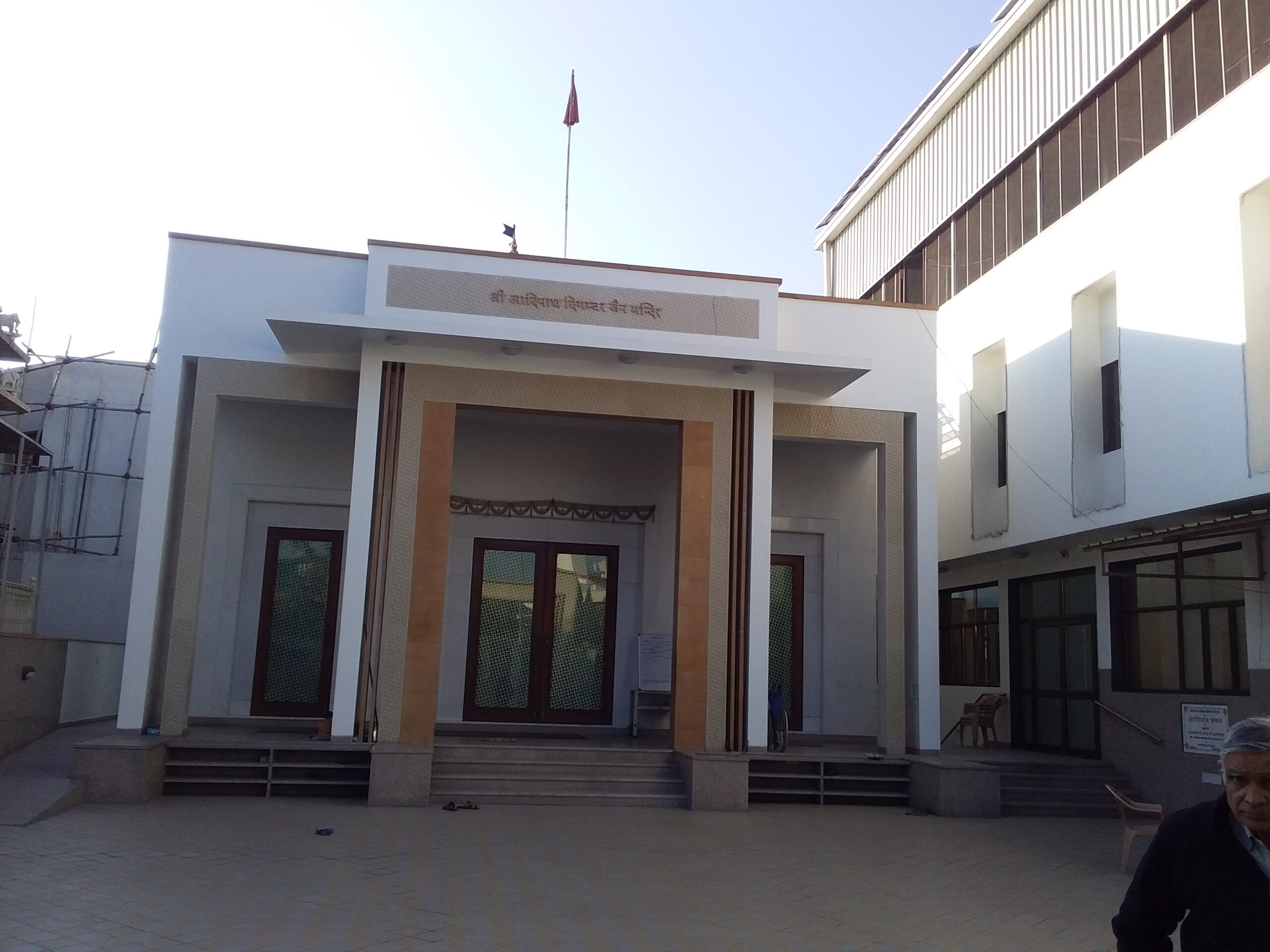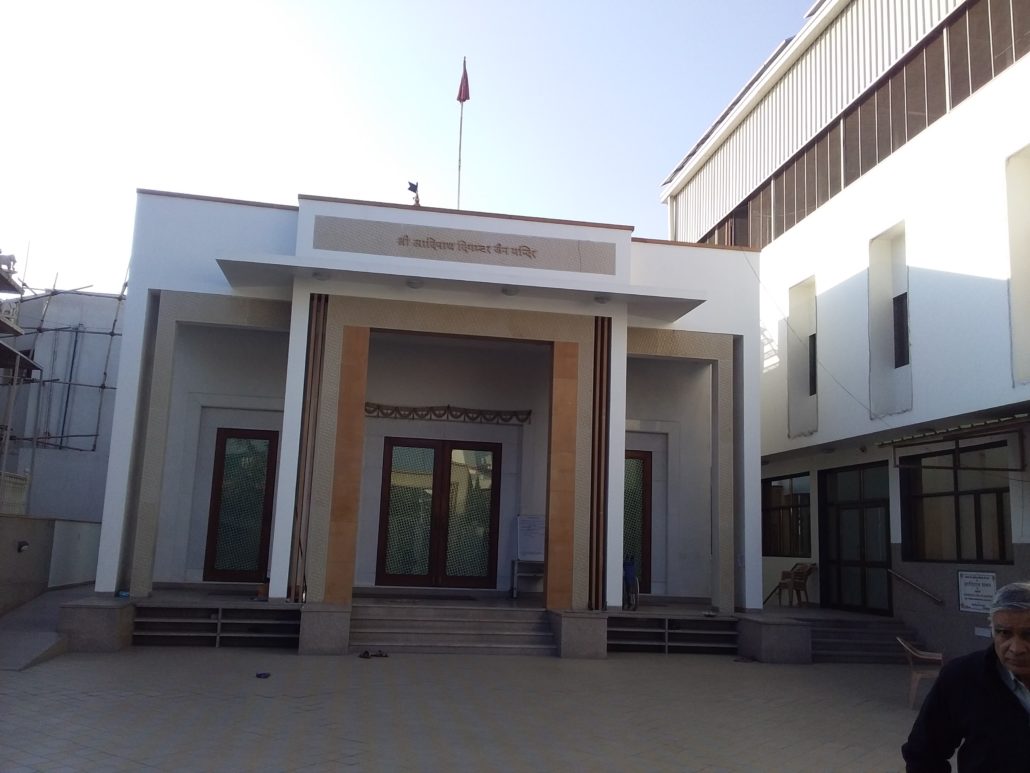

जैन मंदिर का जीर्णोद्धार, सिविल लाइंस, जयपुर
A harmonious blend of traditional Jain temple aesthetics and refined architectural detailing श्वेत संगमरमर, स्वर्णिम अलंकरण एवं पारंपरिक शिल्पकला का सुंदर समन्वय
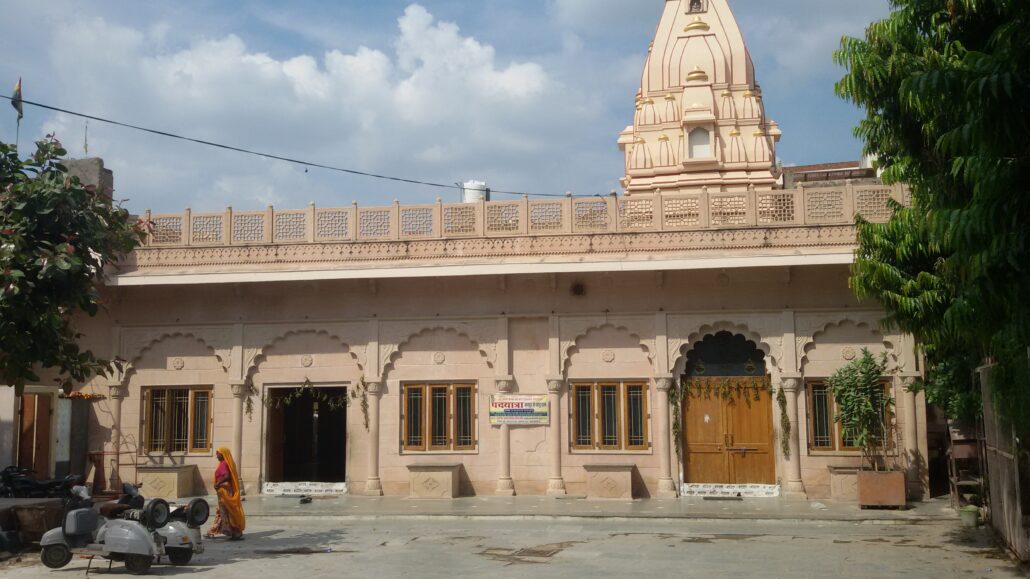
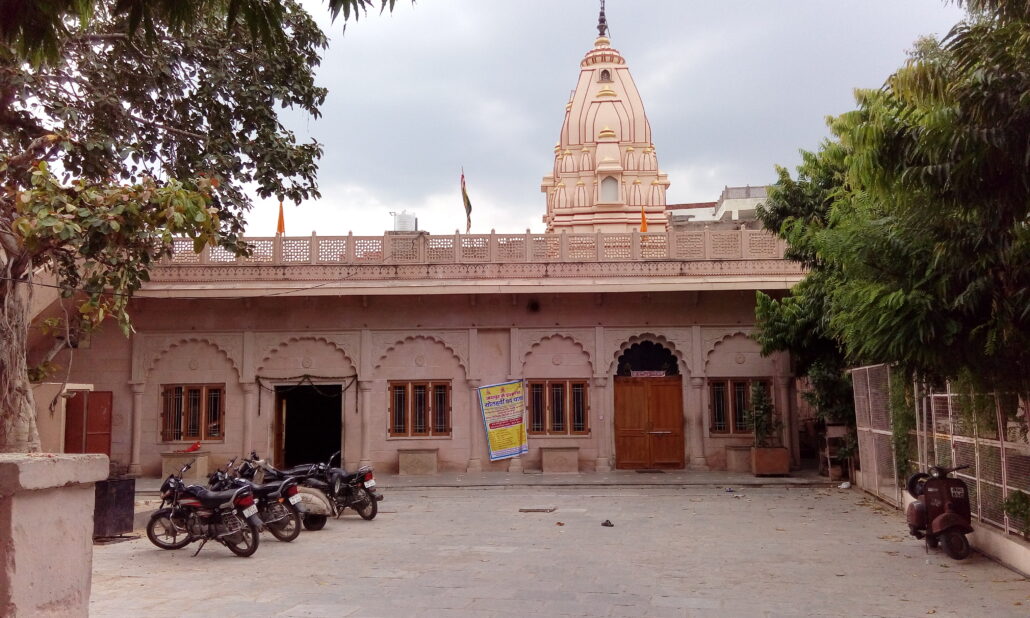
Project Location: Shri Mahavir Digambar Jain Mandir, Hari Marg, Civil Lines, Jaipur, Rajasthan
Project: Temple Interior Renovation
Introduction
Temples are not merely places of worship; they are spaces that embody faith, culture, tradition and architectural heritage. Their interiors contribute significantly to the spiritual experience of devotees. Renovating a temple, therefore, requires a sensitive approach that respects its religious significance while improving its aesthetics, functionality and overall ambience.
भारतीय मंदिर केवल पूजा-अर्चना के स्थल नहीं हैं, बल्कि हमारी धार्मिक आस्था, सांस्कृतिक विरासत, पारंपरिक स्थापत्य कला और शिल्पकला के जीवंत प्रतीक भी हैं। मंदिर का प्रत्येक वास्तु तत्व श्रद्धा और आध्यात्मिक अनुभूति से जुड़ा होता है। इसलिए किसी मंदिर का नवीनीकरण करते समय उसकी मूल धार्मिक पहचान, परंपरा और पवित्रता को बनाए रखना अत्यंत आवश्यक है।
The renovation of Shri Mahavir Digambar Jain Mandir, situated on Hari Marg in Civil Lines, Jaipur, was undertaken with this philosophy. The objective was to rejuvenate the existing temple interior and give it a more refined and graceful appearance while retaining its devotional character and the sanctity of the sacred space.
इसी सोच के साथ जयपुर के हरि मार्ग, सिविल लाइंस स्थित श्री महावीर दिगम्बर जैन मंदिर के नवीनीकरण एवं सौंदर्यीकरण का कार्य किया गया। इस परियोजना का मुख्य उद्देश्य मंदिर के आंतरिक स्वरूप को एक नई, आकर्षक एवं सुव्यवस्थित पहचान देना था, साथ ही उसकी पारंपरिक एवं आध्यात्मिक गरिमा को अक्षुण्ण बनाए रखना था।
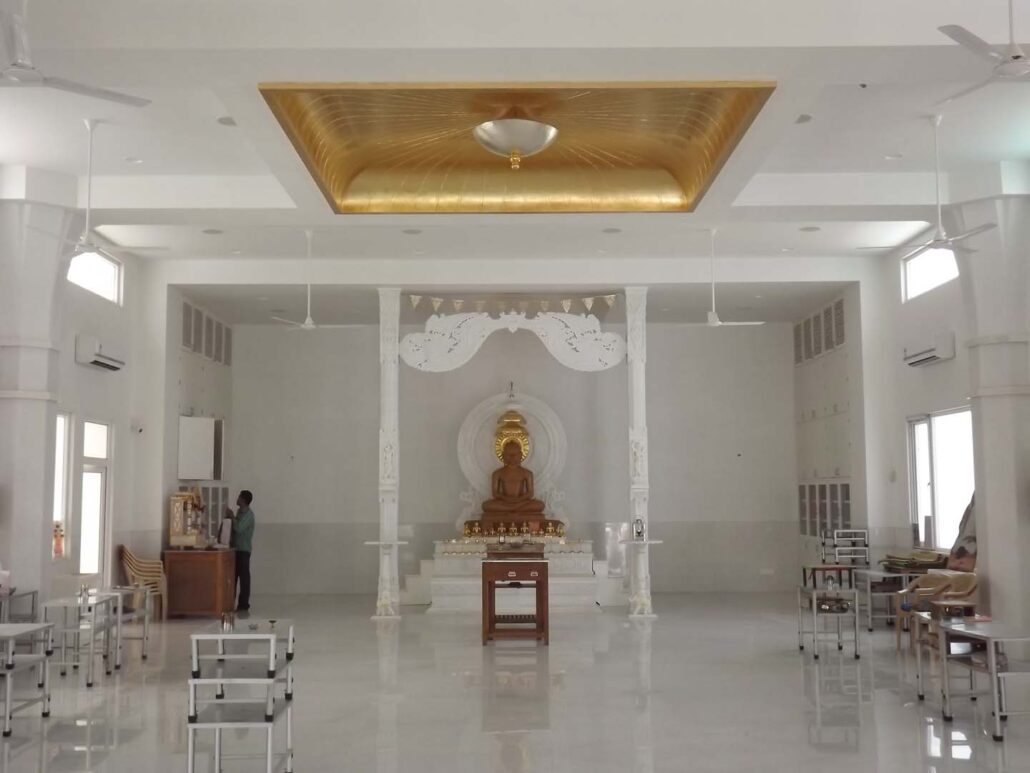
The design approach centred on a sophisticated white and golden colour palette, complemented by carved marble elements and decorative flooring inlay work.
इस नवीनीकरण में सफेद एवं सुनहरे रंगों की सुंदर थीम, संगमरमर की बारीक नक्काशी, वेदी का पुनर्निर्माण तथा कलात्मक मार्बल इनले फ्लोरिंग को प्रमुखता दी गई।
The renovation of Shri Mahavir Digambar Jain Mandir, Civil Lines, Jaipur, is an example of how traditional religious architecture can be refreshed through thoughtful material selection, craftsmanship and sensitive interior design.
श्री महावीर दिगम्बर जैन मंदिर, सिविल लाइंस, जयपुर का नवीनीकरण केवल आंतरिक सज्जा में परिवर्तन नहीं, बल्कि धार्मिक वास्तुकला के प्रति संवेदनशील दृष्टिकोण का एक सुंदर उदाहरण है।
The Existing Temple: Before Renovation
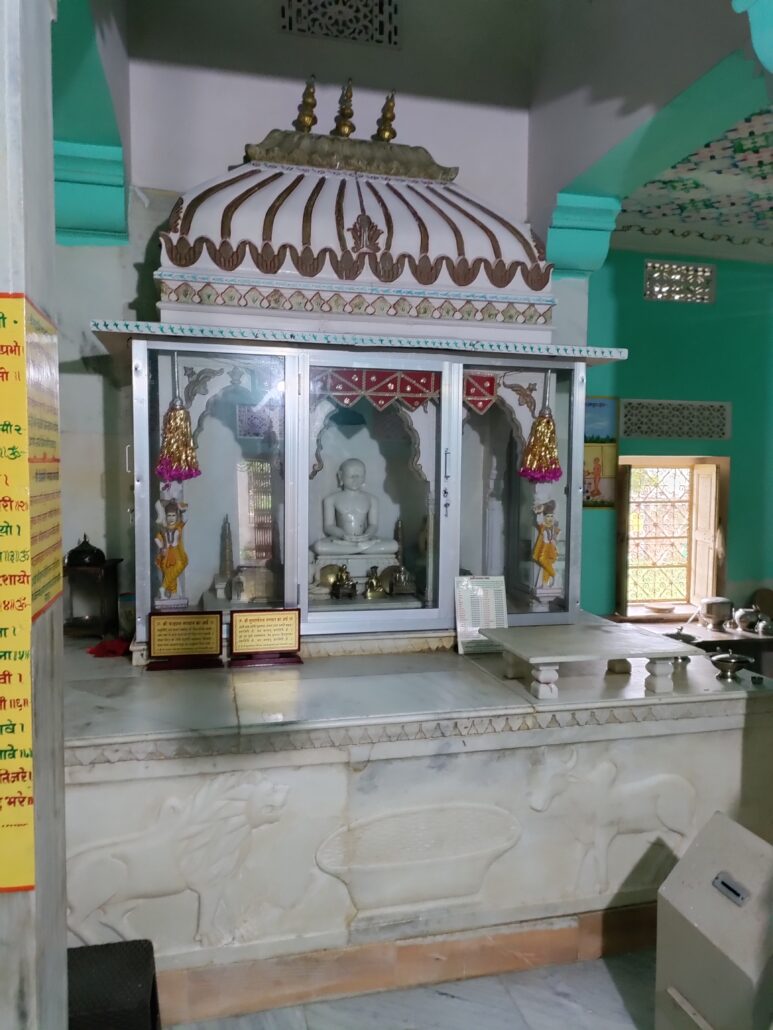
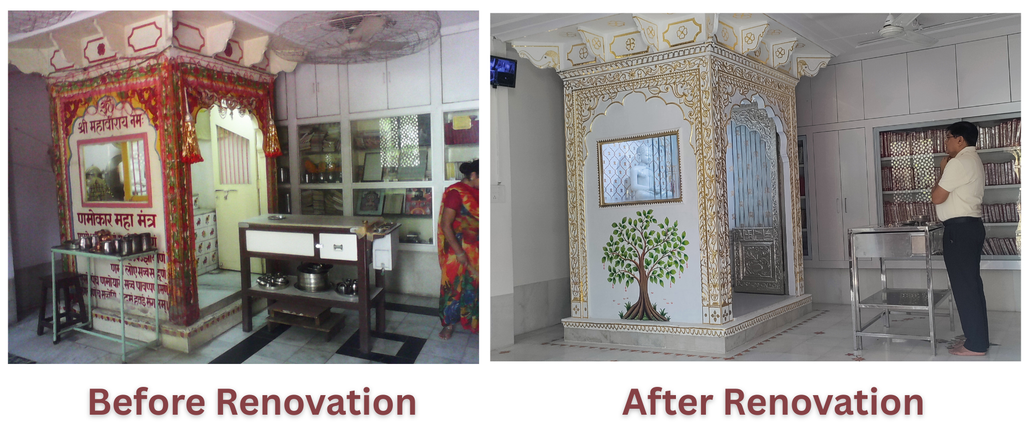
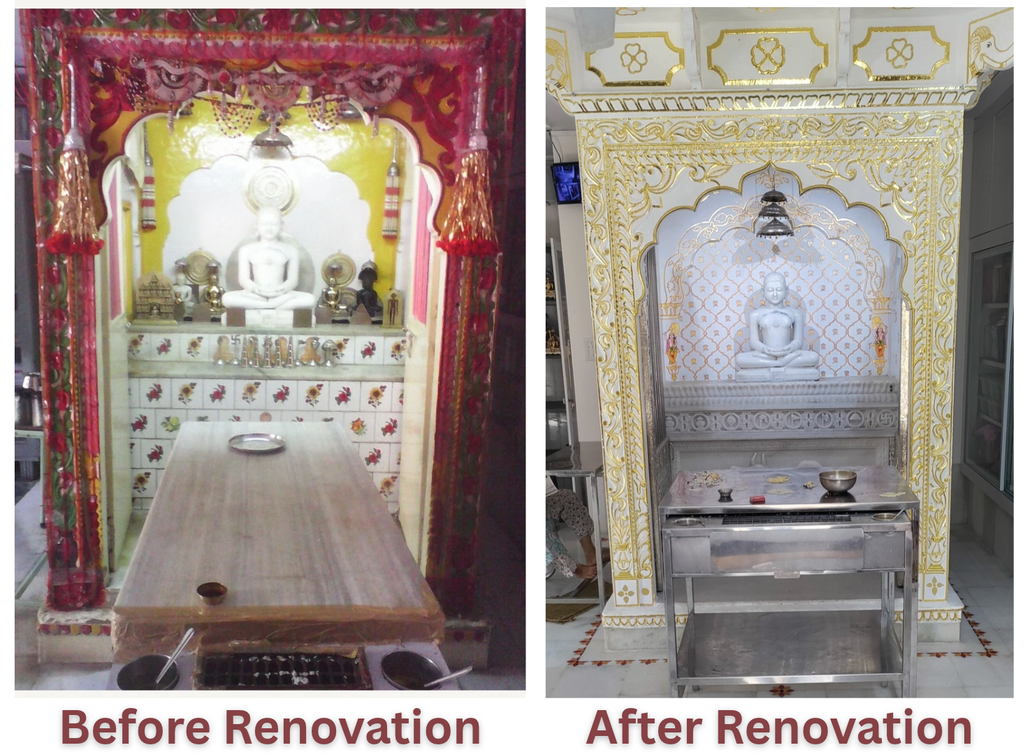
Before the renovation, the temple featured a traditional Vedi (sanctum shrine) decorated with colourful fabric hangings, painted borders and ornamental elements. The backdrop and lower portions of the Vedi incorporated decorative ceramic tiles with floral patterns.
नवीनीकरण से पहले मंदिर की वेदी में पारंपरिक रंगीन सजावट, वस्त्रों की झालरें, सजावटी बॉर्डर तथा फूलों के पैटर्न वाली सिरेमिक टाइल्स का उपयोग किया गया था। वेदी के पीछे एवं निचले हिस्सों में लगी रंगीन टाइल्स मंदिर को एक पारंपरिक और विविध रंगों वाला स्वरूप प्रदान करती थीं।
The existing flooring was relatively simple, while the overall visual character of the space was defined by a combination of multiple colours, decorative fabrics and traditional embellishments.
मंदिर का फर्श अपेक्षाकृत साधारण था तथा संपूर्ण आंतरिक वातावरण में अनेक रंगों और सजावटी तत्वों का मिश्रण दिखाई देता था।
Although these elements reflected the devotional practices and traditional character of the temple, there was an opportunity to establish greater visual harmony and create a more unified architectural expression.
यद्यपि पुराने स्वरूप में मंदिर की पारंपरिक धार्मिक भावना स्पष्ट रूप से परिलक्षित होती थी, फिर भी उसमें एकरूपता, सौंदर्यात्मक संतुलन और आधुनिक कारीगरी के समावेश की संभावनाएँ थीं।
The renovation aimed to achieve this transformation without compromising the spiritual identity of the temple.
नवीनीकरण की परिकल्पना इसी आधार पर तैयार की गई, जिसमें पुराने स्वरूप की आध्यात्मिक पहचान को बनाए रखते हुए मंदिर को अधिक भव्य, शांत और सुरुचिपूर्ण बनाने का प्रयास किया गया।
Design Concept: White and Golden Theme
The principal design concept was to introduce a coordinated white and golden theme throughout the renovated Vedi and its surrounding architectural elements.
मंदिर के नवीनीकरण के लिए श्वेत (White) एवं स्वर्णिम (Golden) रंगों का संयोजन मुख्य डिजाइन थीम के रूप में अपनाया गया।
White was selected as the dominant colour to create a sense of purity, peace, simplicity and spaciousness. Golden detailing was introduced as an accent to highlight the ornamental features and add a sense of richness and traditional elegance.
सफेद रंग शांति, पवित्रता, सरलता और आध्यात्मिकता का प्रतीक है। वहीं सुनहरा रंग पारंपरिक भारतीय स्थापत्य, समृद्धि, गरिमा और कलात्मक सुंदरता को अभिव्यक्त करता है।
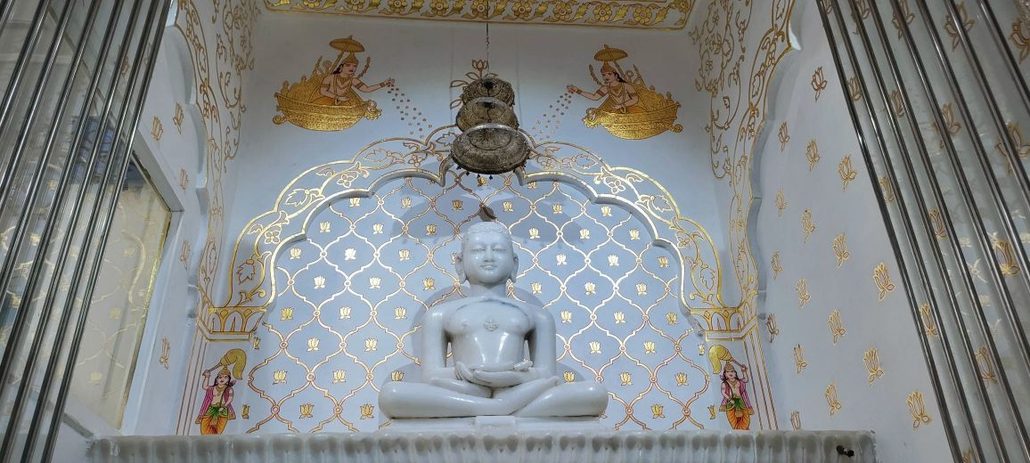
This combination creates a balanced visual composition in which the white surfaces provide calmness, while the golden decorative elements add depth, definition and grandeur.
इन दोनों रंगों के संतुलित उपयोग से मंदिर के आंतरिक वातावरण में एक शांत, दिव्य और भव्य अनुभूति उत्पन्न होती है।
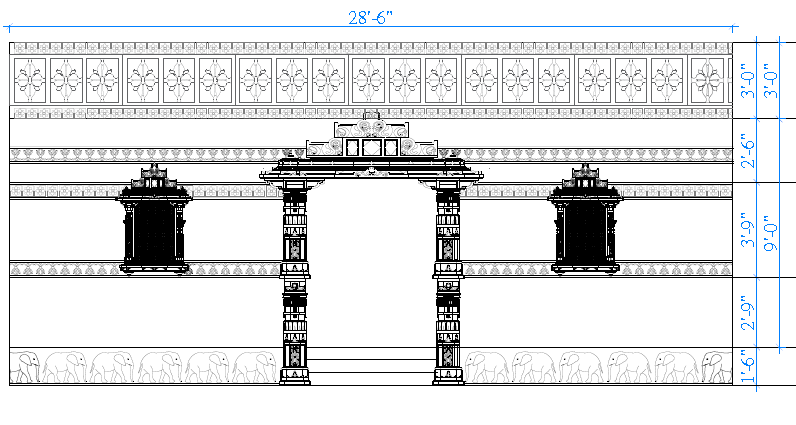
The architectural detailing draws inspiration from traditional Indian and Rajasthani ornamental design, particularly the use of arches, floral motifs, carved borders and intricate decorative patterns.
डिजाइन में पारंपरिक भारतीय एवं राजस्थानी स्थापत्य शैली से प्रेरित मेहराब, पुष्प आकृतियाँ, अलंकृत बॉर्डर और बारीक नक्काशीदार पैटर्न को शामिल किया गया। स्वर्णिम अलंकरण को मुख्य रूप से वास्तु के उभरे हुए सजावटी हिस्सों और किनारों पर उपयोग किया गया, जिससे सफेद पृष्ठभूमि पर उनकी सुंदरता और अधिक उभरकर सामने आती है।
Transformation of the Vedi
The Vedi is the most significant architectural and spiritual element of a Jain temple. It houses the principal Tirthankara idol and forms the focal point of the entire prayer space.
मंदिर की वेदी संपूर्ण पूजा स्थल का सबसे महत्वपूर्ण वास्तु एवं आध्यात्मिक केंद्र होती है। यहीं भगवान तीर्थंकर की प्रतिमा स्थापित होती है और भक्तों का ध्यान स्वाभाविक रूप से इसी स्थान पर केंद्रित रहता है।
One of the major interventions in this renovation was the transformation of the existing Vedi.
इस परियोजना में वेदी का नवीनीकरण प्रमुख कार्यों में से एक था।
The earlier tiled surfaces were replaced with beautifully carved marble stone elements. This intervention introduced a more permanent, integrated and sophisticated appearance.
पुरानी सजावटी टाइल्स को हटाकर उनके स्थान पर नक्काशीदार संगमरमर के पत्थरों का उपयोग किया गया। इससे वेदी को अधिक स्थायी, सुरुचिपूर्ण और पारंपरिक स्थापत्य के अनुरूप स्वरूप प्राप्त हुआ।
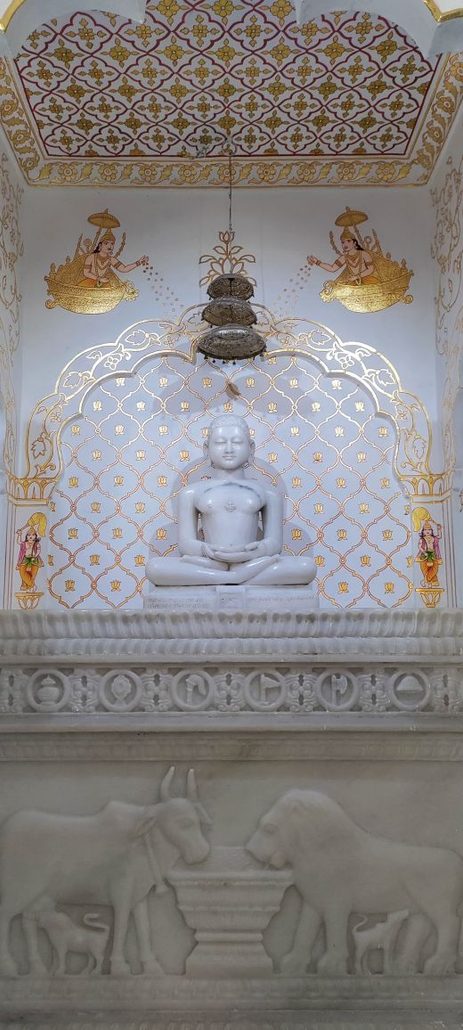
The new Vedi design incorporates:
नई वेदी की प्रमुख विशेषताएँ हैं:
- Carved marble stone panels with intricate ornamental detailing.
- Decorative arch framing inspired by traditional Indian temple architecture.
- Golden highlights that accentuate the carved patterns and borders.
- A refined white backdrop that enhances the visual prominence of the Jain Tirthankara idol.
- Coordinated decorative elements around the sanctum to create a unified architectural composition.
- नक्काशीदार संगमरमर के पैनल एवं सजावटी बॉर्डर।
- पारंपरिक भारतीय शैली से प्रेरित कलात्मक मेहराब।
- नक्काशी को उभारने के लिए सुनहरे रंग का सुंदर उपयोग।
- भगवान की प्रतिमा के पीछे शांत एवं आकर्षक सफेद पृष्ठभूमि।
- वेदी के विभिन्न हिस्सों में एकरूपता बनाए रखने के लिए समन्वित अलंकरण।
The carved marble detailing gives the Vedi a sense of craftsmanship and permanence, while the white and golden treatment establishes a calm and dignified spiritual atmosphere.
संगमरमर की नक्काशी से वेदी में पारंपरिक शिल्पकला की सुंदरता और स्थायित्व का अनुभव होता है। सफेद एवं सुनहरे रंगों का संयोजन इसे एक विशिष्ट और गरिमामय पहचान प्रदान करता है।
Marble Inlay Flooring: Adding Artistic Detail
Another important aspect of the renovation was the replacement of the existing flooring with decorative marble inlay work.
मंदिर के नवीनीकरण का एक अन्य महत्वपूर्ण हिस्सा फर्श का परिवर्तन था।
The new white marble flooring provides a clean and elegant base for the temple interior. Carefully designed floral and geometric inlay patterns introduce colour and traditional artistry into the otherwise restrained flooring scheme.
पुराने फर्श के स्थान पर सफेद संगमरमर की नई फ्लोरिंग तैयार की गई, जिसमें विभिन्न रंगों के संगमरमर से आकर्षक इनले डिजाइन बनाए गए।
These patterns are positioned to create visual interest without overwhelming the space. The contrast between the white marble background and the coloured decorative motifs helps establish a connection with traditional Indian craftsmanship.
फर्श पर पुष्प एवं ज्यामितीय आकृतियों से प्रेरित कलात्मक पैटर्न का प्रयोग किया गया। इन डिजाइनों में रंगों का संयोजन सफेद संगमरमर की पृष्ठभूमि के साथ सुंदर दृश्यात्मक संतुलन बनाता है।
The flooring also complements the renovated Vedi, creating continuity between the horizontal and vertical surfaces of the temple interior.
मार्बल इनले का यह कार्य केवल फर्श को सजाने तक सीमित नहीं है, बल्कि यह भारतीय पारंपरिक शिल्पकला और संगमरमर पर की जाने वाली बारीक कारीगरी की अभिव्यक्ति भी है।
फर्श के डिजाइन को इस प्रकार रखा गया कि वह वेदी के नए स्वरूप के साथ सामंजस्य स्थापित करे और संपूर्ण मंदिर परिसर में एक सुंदर दृश्यात्मक निरंतरता बनी रहे।
Architectural Detailing and Overall Ambience
The renovation was not limited to the replacement of materials. Equal attention was given to the visual coordination of architectural elements.
नवीनीकरण के दौरान केवल सामग्री और रंगों को बदलने पर ध्यान नहीं दिया गया, बल्कि मंदिर के संपूर्ण आंतरिक स्वरूप में एकरूपता स्थापित करने का प्रयास किया गया।
The ornate arch profiles, carved borders, floral motifs and golden highlights have been brought together to establish a consistent design language. The resulting composition enhances the visual identity of the Vedi and creates a more organised and harmonious interior.
वेदी के चारों ओर निर्मित सजावटी मेहराब, नक्काशीदार बॉर्डर, पुष्प आकृतियाँ एवं सुनहरे अलंकरण एक समन्वित डिजाइन भाषा प्रस्तुत करते हैं।
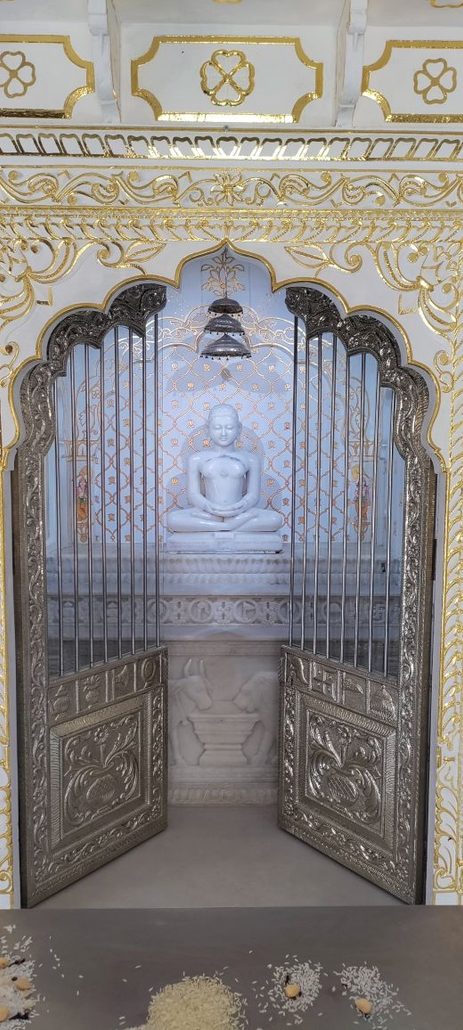
The stainless-steel ritual furniture and functional arrangements also contribute to the practical use of the prayer space while maintaining a clean appearance.
The overall design seeks to balance decorative richness with visual simplicity, ensuring that the architectural elements complement rather than distract from the spiritual focal point.
सफेद संगमरमर की सतहों पर सुनहरी सजावट मंदिर के वास्तु तत्वों को विशेष पहचान प्रदान करती है। इसके साथ ही नई फ्लोरिंग और वेदी के बीच रंगों एवं पैटर्न का सामंजस्य संपूर्ण आंतरिक वातावरण को अधिक व्यवस्थित और आकर्षक बनाता है।
मंदिर के पूजा संबंधी उपयोग को ध्यान में रखते हुए आवश्यक क्रियात्मक व्यवस्थाओं को भी बनाए रखा गया है, ताकि सौंदर्यीकरण के साथ उपयोगिता और सुविधा का संतुलन बना रहे।
Before and After: An Architectural Transformation
The transformation of Shri Mahavir Digambar Jain Mandir demonstrates how a carefully planned renovation can significantly enhance the character of an existing religious space.
The earlier interior had a colourful and traditional appearance, with fabric decorations and tiled surfaces defining the Vedi. The renovated interior presents a more cohesive architectural identity through the use of white marble, golden ornamental detailing, carved stonework and decorative flooring inlays.
The key transformations include:
- Colour palette: Transition from a multicoloured decorative scheme to a coordinated white and golden theme.
- Vedi treatment: Replacement of existing decorative tiles with carved marble stone.
- Flooring: Introduction of white marble flooring with artistic inlay patterns.
- Ornamentation: Integration of traditional floral, geometric and arch-inspired detailing.
- Visual harmony: Coordination of the flooring, Vedi and surrounding architectural elements into a unified interior composition.
श्री महावीर दिगम्बर जैन मंदिर का नवीनीकरण इस बात का उदाहरण है कि उचित डिजाइन दृष्टिकोण, सामग्री के चयन और पारंपरिक शिल्पकला के उपयोग से किसी पुराने धार्मिक स्थल के स्वरूप में सकारात्मक परिवर्तन किया जा सकता है।
नवीनीकरण से पहले मंदिर की पहचान रंगीन सजावटी टाइल्स, वस्त्रों की झालरों और पारंपरिक अलंकरण से बनती थी। नवीनीकरण के बाद मंदिर को सफेद संगमरमर, सुनहरी नक्काशी और कलात्मक इनले फ्लोरिंग के माध्यम से एक नया एवं अधिक परिष्कृत स्वरूप प्राप्त हुआ।
इस परिवर्तन के प्रमुख पहलू हैं:
- रंग संयोजन: बहुरंगी सजावट से एकरूप सफेद एवं सुनहरी थीम की ओर परिवर्तन।
- वेदी का स्वरूप: पुरानी सजावटी टाइल्स के स्थान पर नक्काशीदार संगमरमर का उपयोग।
- फ्लोरिंग: साधारण फर्श के स्थान पर कलात्मक मार्बल इनले डिजाइन।
- अलंकरण: पारंपरिक मेहराब, पुष्प आकृतियों एवं सुनहरी नक्काशी का समावेश।
- सौंदर्यात्मक एकरूपता: वेदी, फर्श और आसपास के वास्तु तत्वों में सामंजस्य स्थापित करना।