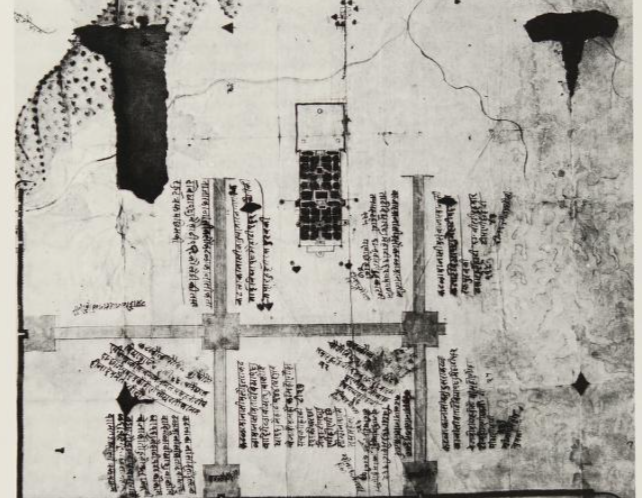

Jaipur – UNESCO World Heritage City
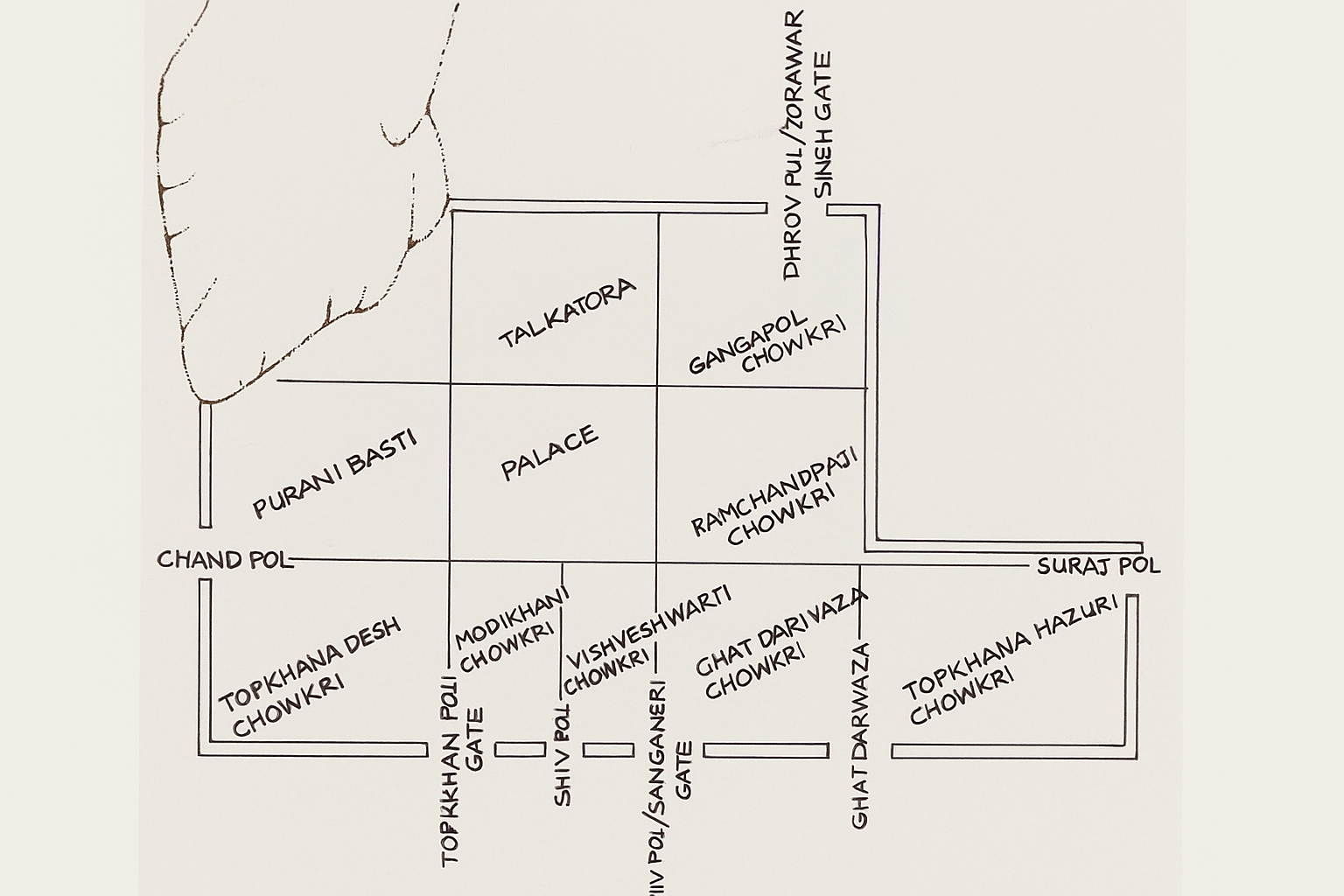
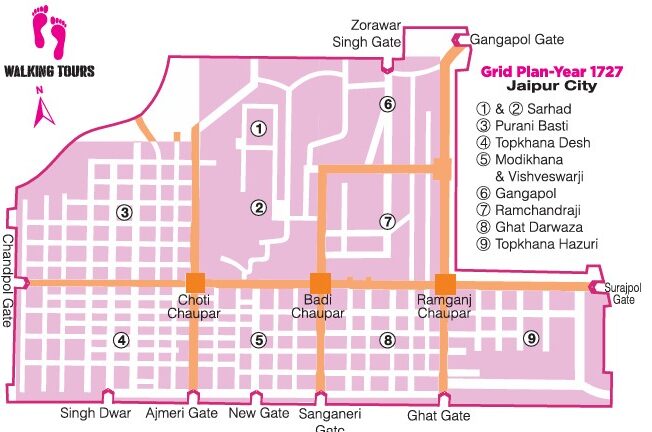
The walled city is accessed through nine monumental gateways, each oriented for practical and symbolic functions:
Suraj Pol (Sun Gate)
Chand Pol (Moon Gate)
Ram Pol (Ghat Gate)
Singh Pol (Lion Gate)
Kishan Pol
Ganga Pol
Dhruv Pol (Zorawar Singh Gate)
Shiv Pol (Sanganeri Gate)
Man Pol (New Gate)
The Walled City of Jaipur, a UNESCO World Heritage Site, is not only famous for its planned grid layout and vibrant bazaars but also for its grand gateways. Each gate has a unique story, architectural significance, and cultural association that continues to reflect the city’s glorious heritage. Let’s take a walk through the magnificent gates of Jaipur and explore their importance.
1. Surajpole Gate – The Gateway of the Rising Sun
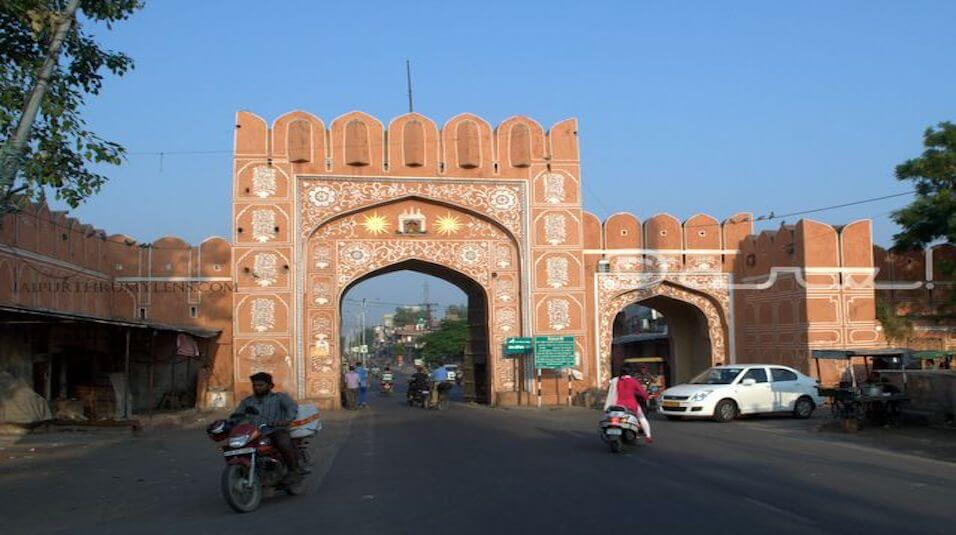
The Surajpole, or Sun Gate, is located on the eastern side of Jaipur, where the sun rises. True to its name, the gate has two sun motifs painted on its wall, making it easily recognizable. It also connects towards the famous Sun Temple of Galta Ji. Surajpole has only one secondary gate beside it and symbolizes the dawn of Jaipur’s bustling city life.
2. Chandpole Gate – The Moonlit Entrance
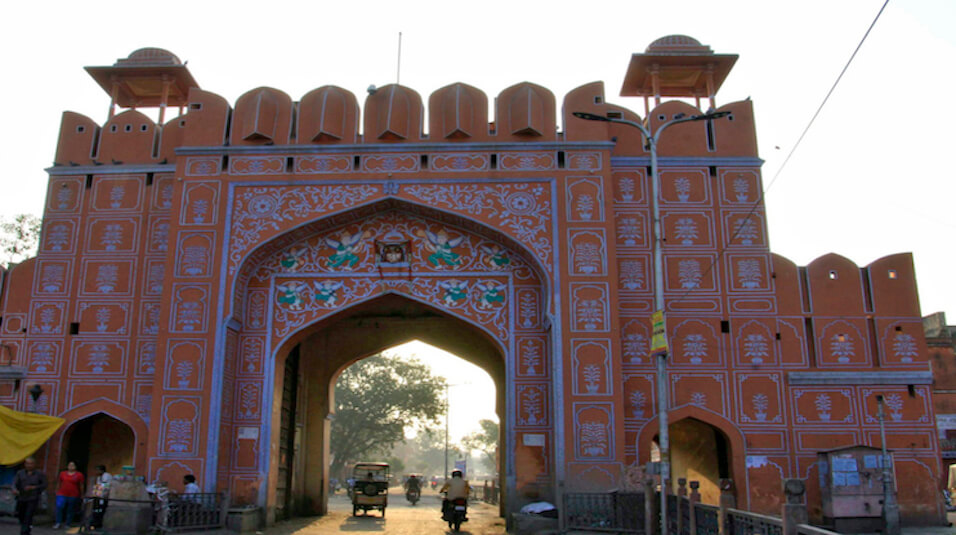
Situated opposite Surajpole on the western side, the Chandpole Gate represents the Moon. Its most prominent landmark is the Chandpole Hanuman Ji Temple, with a 25-feet-high shikhar (spire). The adjoining Chandpole Bazar is one of Jaipur’s busiest markets, famous for daily trade and traditional shopping. Chandpole has two smaller secondary gates on either side, ensuring smooth passage for traders and travelers.
3. Zorawar Singh Gate – The Northern Sentinel
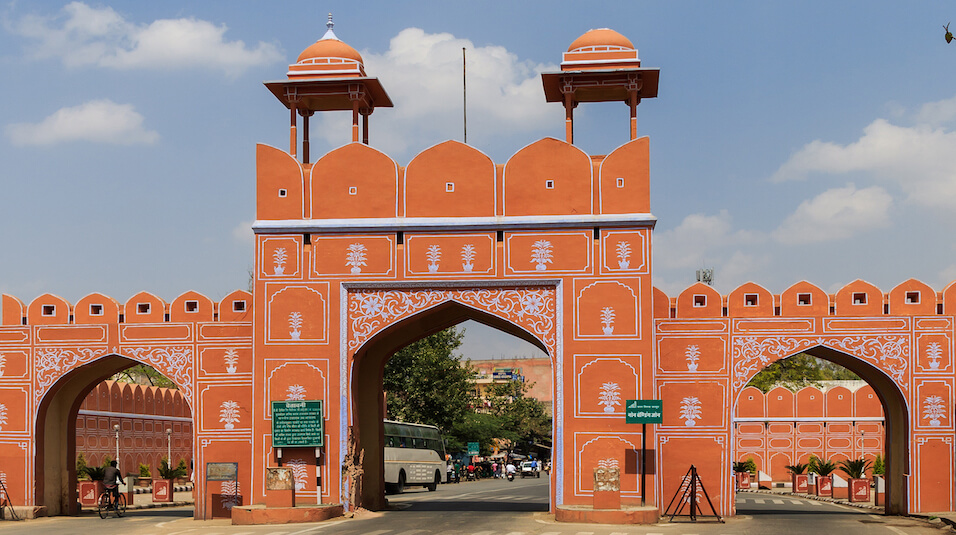
Originally called Dhruv Pole, after the Pole Star, this was the first gate constructed for Jaipur. Today, it is known as Zorawar Singh Darwaza. Located in the north, it is also the widest among all Jaipur gates, including its secondary gates. It connects Jaipur with Amer town and serves as the entryway for travelers arriving from Delhi.
4. Ajmeri Gate – The Western Road to Ajmer
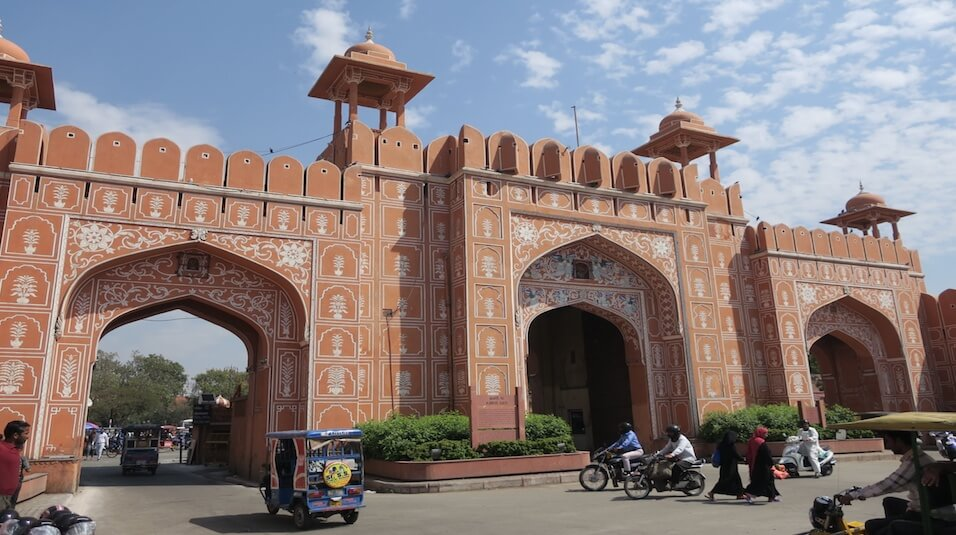
The Ajmeri Darwaza, also known as Kishan Pole, lies on the southern side and leads towards the historic road to Ajmer city. Inside the walls, the gate opens into the bustling Kishanpole Bazar, renowned for its vibrant tie-and-dye fabrics. The design includes a large central door and two smaller secondary doors on each side.
5. New Gate – A Blend of Mughal and European Styles
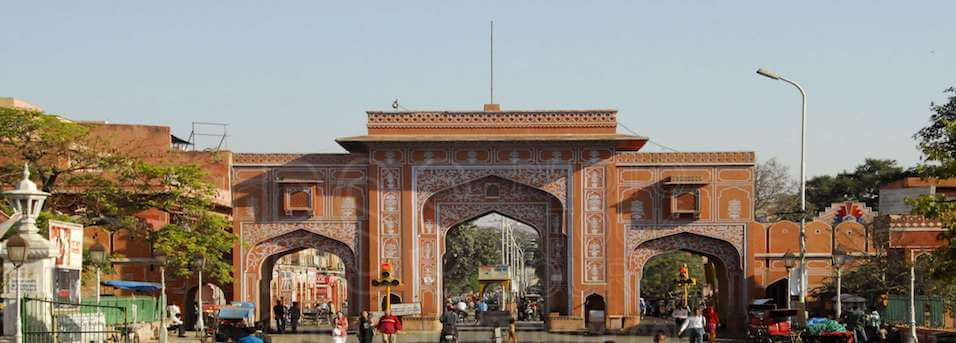
The Naya Pole, or New Gate, was not part of Jaipur’s original design. Built in the mid-19th century during the reign of Sawai Ram Singh II, it replaced a smaller secret passage once known as Chor Darwaza. With its blend of European and Mughal architectural styles, this gate is unique. From here, one can view the Albert Hall Museum, while inside, it leads towards the Tripolia Gate of City Palace.
6. Sanganeri Gate – The Shivpole Connection

The Sanganeri Gate, also called Shivpole, lies on the southern rampart. It connects Jaipur with the town of Sanganer, famous for its block-printed textiles. Adjacent to the gate is a historic Shiv Mandir, where the royal family once performed rituals during Mahashivratri. The gate also provides direct access to Johari Bazar, the jewelry hub of Jaipur.
7. Ghat Gate – The Road to Ramganj

The last of the southern gates, the Ghat Darwaza, is named after the road that leads towards Ghat ki Ghuni. It opens into Ramchandra Ji Chowkri and Ramganj Bazar, making it a vital passage for trade and culture. It is also popularly known as Ram Pole. Unlike some of the other gates, it has only one secondary opening.
Beyond the Main Gates
Apart from these seven prominent gates, the walled city also has several smaller entrances like Samrat Pole, Char Darwaza, Ganga Pole, Ganesh Pole, and Tripolia Gate. Each carries its own tale and architectural style, decorated with floral motifs and traditional Jaipur colors. Together, they showcase the city’s harmony between functionality, security, and artistry.
The gates of Jaipur are not just passageways but living heritage markers that narrate stories of astronomy, religion, trade, and royal traditions. Whether you’re entering through the Sun Gate at dawn or walking out through the Moon Gate under twilight, every gate offers a glimpse into the city’s timeless grandeur.
Home page : Jaipur – UNESCO World Heritage City
The Chowkris – The Wards of Jaipur | The Mohallas – Life Within the Wards | Jal Mahal and Ishvar Lat Jaipur | Hawa Mahal – The Palace of Winds | Jaipur Heritage Walk | Important Bazar |
Jeypore portfolio of architecture details : Part-1 Coping and Plinths
Plate 1 | Plate 2 | Plate 3 | Plate 4 | Plate 5 | Plate 6 | Plate 7 | Plate 8 | Plate 9 | Plate 10 | Plate 11 | Plate 12 | Plate 13 | Plate 14 | Plate 15 | Plate 16 | Plate 17 | Plate 18 | Plate 19 | Plate 20 | Plate 21 | Plate 22 | Plate 23