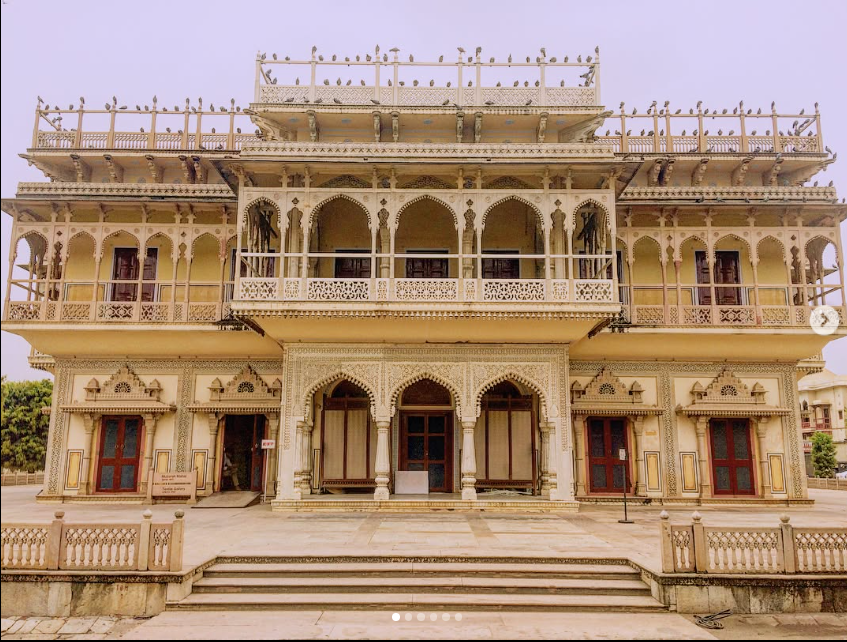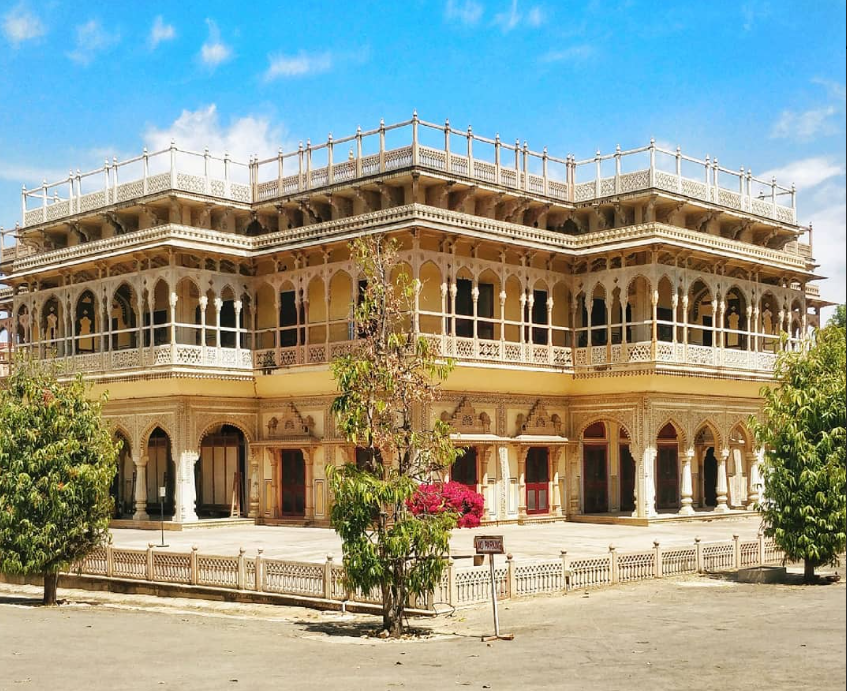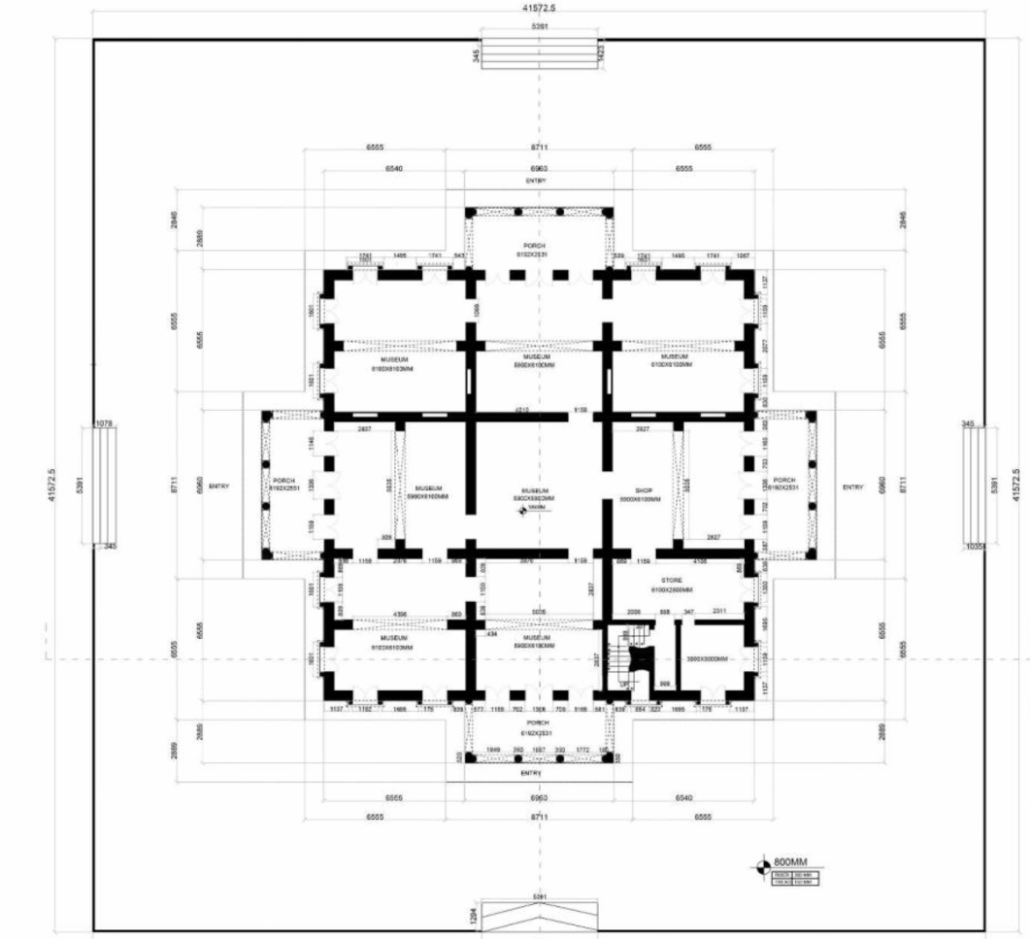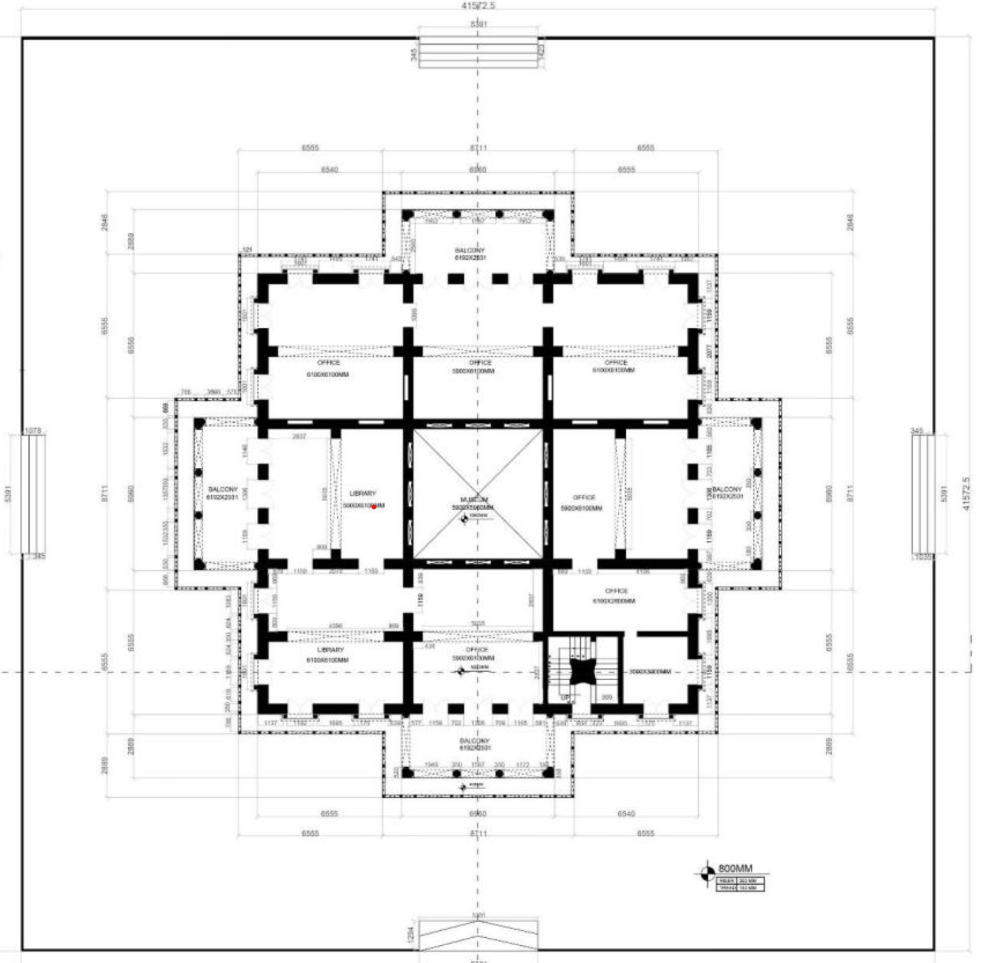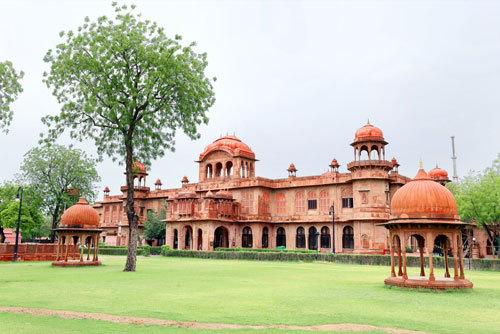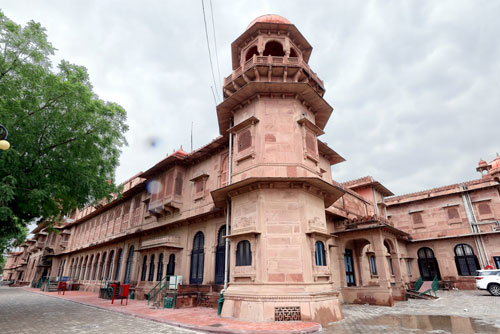

Among the major works of the Jaipur state’s architectural department in the early 20th century, the rebuilding of Rambagh Palace (1909–16) stands out as a landmark project. It reflects both the continuing legacy of Samuel Swinton Jacob and the craftsmanship of his successors, particularly Chiman Lal and Bhola Nath. Today, the Rambagh Palace is world-renowned as a luxury hotel, but its origins tell a layered story of architectural evolution, royal patronage, and changing tastes.
Origins: A Garden Retreat (c.1835)
The story begins during the reign of Sawai Ram Singh, around 1835. On the outskirts of Jaipur, beyond the walled city, he built a modest retreat set within landscaped gardens. Its purpose was simple—a peaceful haven outside the bustle of the capital.
Transformation into a Guest House
Later, Maharaja Madho Singh II envisioned something grander. He decided to convert the retreat into a guest house for visiting dignitaries and turned to Jacob for designs. Jacob’s scheme included:
- Two wings connected by a central range of large rooms and a wide veranda.
- A U-shaped plan opening towards the garden on the southeast.
- A great hall to the west, suitable for royal gatherings.
Though Jacob likely completed these designs around 1905, the actual construction was undertaken between 1909 and 1916 by the Raj Imarat (state public works department) under Chiman Lal and his deputy Bhola Nath. The project culminated in a grand banquet held in November 1916, hosted for the Viceroy, Lord Chelmsford, marking the palace’s formal inauguration. This became Chiman Lal’s last major work before his retirement in 1919 due to ill health.
Expansion under Sawai Man Singh II
In the 1930s, the Rambagh Palace underwent its most dramatic transformation under Sawai Man Singh II (r. 1922–49). Three vast new wings were added, enclosing a courtyard on the western side, along with a new entrance in the southwest corner. This phase marked the shift from a retreat to a full-fledged royal palace, suited to the modern image of Jaipur’s last ruling Maharaja.
A Blend of Indian and European Influence
What makes Rambagh Palace architecturally fascinating is its blend of influences.
- Jacob and Chiman Lal’s phases retained Indian logic in spatial organization—such as variations in floor levels, screened balconies, and segmented interiors—though expressed on a European scale.
- Man Singh’s additions, however, leaned more towards a European palace model, with the Indian organizational elements giving way to a grand, symmetrical layout.
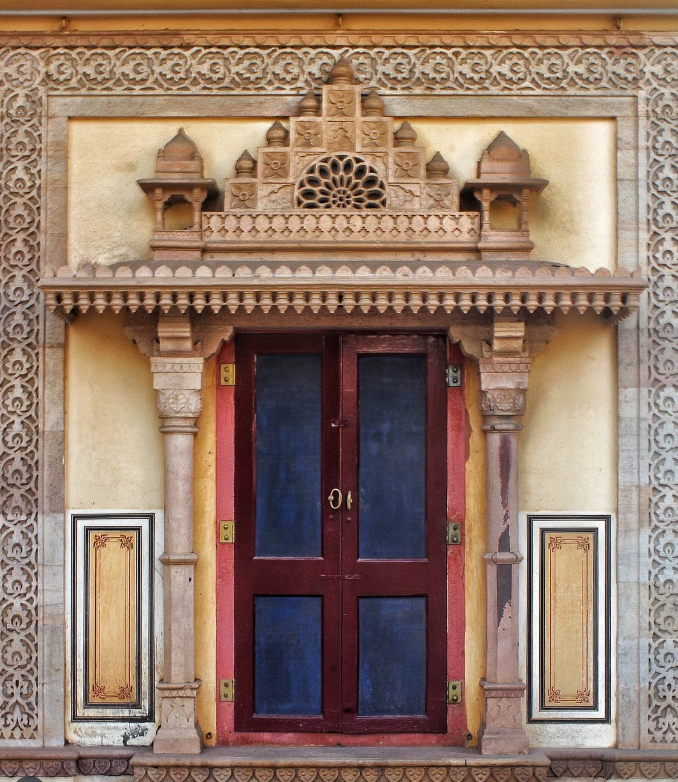
Yet, throughout its development, the stylistic vocabulary remained consistently Rajput—with arches, columns, carved windows, and ornate balconies maintaining the palace’s local identity.
Rambagh Palace Today
What began as a garden retreat in the 1830s is now celebrated as one of the world’s most luxurious hotels. Its journey from a royal residence to a heritage hotel captures the architectural and cultural shifts of Jaipur over a century, showcasing how tradition and modernity were negotiated through design.
Home page : Jaipur – UNESCO World Heritage City
The Chowkris – The Wards of Jaipur | The Mohallas – Life Within the Wards | Jal Mahal and Ishvar Lat Jaipur | Hawa Mahal – The Palace of Winds | Jaipur Heritage Walk | Important Bazar | Chowkri Modikhana | Chowkri Vishveshwarji
Jeypore portfolio of architecture details : Part-1 Coping and Plinths
Plate 1 | Plate 2 | Plate 3 | Plate 4 | Plate 5 | Plate 6 | Plate 7 | Plate 8 | Plate 9 | Plate 10 | Plate 11 | Plate 12 | Plate 13 | Plate 14 | Plate 15 | Plate 16 | Plate 17 | Plate 18 | Plate 19 | Plate 20 | Plate 21 | Plate 22 | Plate 23