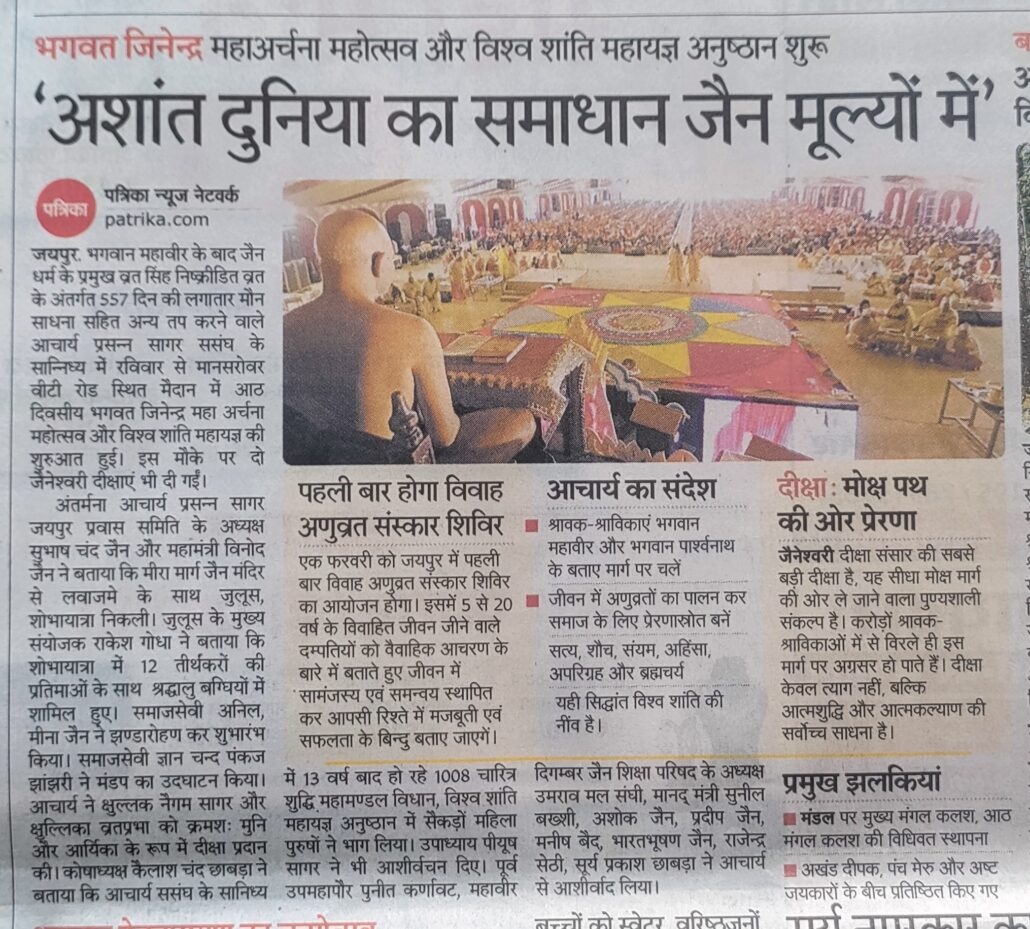

भगवत जिनेन्द्र महा अर्चना महोत्सव & चारित्र शुद्धि विधान द्वितीय दिवस | जयपुर | 26 जनवरी 2026
🚩 प्रभु सवारी एवं मंडल प्रदक्षिणा
26 जनवरी 2026 को प्रातः सर्वप्रथम पुण्यवान जिनेन्द्र भक्तों ने श्रीजी की प्रतिमा का शिरोद्धार कर संगीतमय वातावरण में
मंडल जी की भव्य प्रदक्षिणा की।
“प्रभु जी की निकली सवारी, प्रभु जी की महिमा है न्यारी…”
भक्ति गीतों, जयकारों और भावनाओं से ओतप्रोत यह प्रभु सवारी श्रद्धालुओं के हृदय में अपूर्व आनंद का संचार कर रही थी।
अभिषेक एवं शांतिधारा – भक्ति का शिखर
प्रदक्षिणा उपरांत श्रीजी की प्रतिमा को पांडुक शिला पर विराजमान कर पुण्यवान श्रावकों द्वारा भक्ति भाव से प्रासुक जलधार से अभिषेक किया गया।
कलशों से झरती जलधारा, आदिनाथ भगवान का मस्तकाभिषेक, और गूंजती जय-जयकार— इन क्षणों में सम्पूर्ण वातावरण
दिव्यता से भर उठा।
इसी क्रम में पूज्य गुरुदेव द्वारा उच्चारित मंत्रों के मध्य विश्व कल्याण के निमित्त शांतिधारा की गई, जिसमें श्रद्धा का अद्भुत प्रवाह स्पष्ट रूप से दिखाई दिया।
अर्घ समर्पण, आरती एवं पूजन
श्रद्धालुओं ने आगे बढ़कर प्रभु को अर्घ समर्पित किएऔर अपने अंतरंग भक्ति भाव को अभिव्यक्त किया।
इसके पश्चात जैन अनुयायियों ने भक्ति भाव से दिव्य एवं अलौकिक आरती कर सम्पूर्ण पांडाल को भक्ति-मय बना दिया।
“नीर के संग में मेरे मन ने तुमसे डोरी जोड़ी…”
आरती उपरांत मंत्रोच्चार के मध्य पूजा-अर्चना का क्रम चला, जिसमें भक्त पूज्य गुरुदेव के वचनामृत श्रवण से आध्यात्मिक रूप से समृद्ध होते दिखाई दिए।
पूज्य गुरुदेव का प्रेरणादायी उद्बोधन
कार्यक्रम स्थल पर पूज्य गुरुवर के आगमन पश्चात श्रद्धालुओं ने पाद प्रक्षालन कर स्वयं को धन्य अनुभव किया।
इसके उपरांत अंतर्मना आचार्य श्री 108 प्रसन्न सागर जी महाराज ने श्री वृहत चारित्र शुद्धि विधान के आध्यात्मिक महत्व पर गंभीर एवं हृदयस्पर्शी उद्बोधन दिया।
उन्होंने कहा—
- एकेन्द्रिय जीवों के बिना जीवन की कल्पना भी असंभव है
- सबसे अधिक पाप एकेन्द्रिय जीवों की विराधना में होता है
- यह विधान मन, वचन और काया से हुई हिंसा का
प्रभावी प्रायश्चित है
उनके वचनों ने श्रद्धालुओं को आत्ममंथन की ओर प्रेरित किया।
चारित्र शुद्धि विधान – विधि, भाव और अर्थ का संगम
प्रतिष्ठाचार्य जी के निर्देशन में श्रावक-श्राविकाओं ने मंत्रोच्चार के साथ चारित्र शुद्धि विधान की पूजा-अर्चना का शुभारंभ किया।
प्रत्येक अर्घ्य के भावार्थ एवं आध्यात्मिक महत्व को स्पष्ट किया गया, जिससे भक्त केवल क्रिया नहीं, बल्कि भाव सहित आराधना में लीन दिखाई दिए।
मंडल जी पर श्रीफल अर्पण एवं क्रमवार ध्वजा स्थापना के साथ विधान पूर्णता की ओर अग्रसर हुआ।
🔥 हवन एवं विश्व शान्ति का संकल्प
विधान पूजन के पावन क्षणों में भक्तों ने हवन की पवित्र अग्नि में समर्पण भाव से आहुतियाँ अर्पित कीं। इन आहुतियों से सम्पूर्ण वातावरण आध्यात्मिक ऊर्जा से सराबोर हो उठा और विश्व शान्ति का संकल्प और भी सुदृढ़ हुआ।
New Paper Cutting
भास्कर न्यूज | जयपुर 28 jan 2026
मानसरोवर हाउसिंग बोर्ड ग्राउंड पर 1234 अर्घ्य चढ़ाए गए; 31 जनवरी तक रोजाना अभिषेक, शांतिधारा, धर्मसभा और गुरु पूजा का आयोजन
चारित्र शुद्धि महामण्डल विधान; जैन संतों ने बताए एक महीने में 10 व्रत किए जाएं, तब 10 साल में पूर्ण होता है चारित्र शुद्धि व्रत
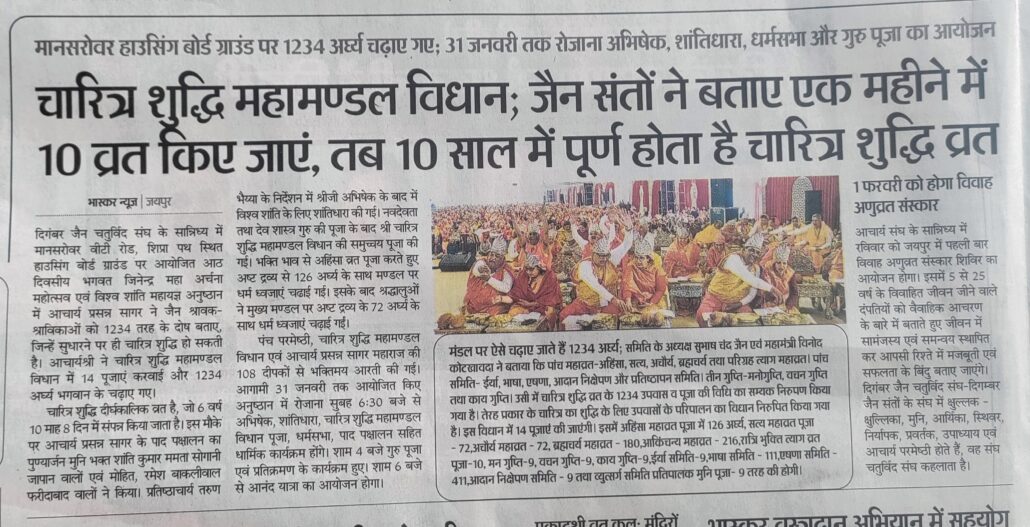
दिगंबर जैन चतुर्विद संघ के सानिध्य में मानसरोवर बीटी रोड, शिप्रा पथ स्थित हाउसिंग बोर्ड ग्राउंड पर आयोजित आठ दिवसीय भगवत जिनेन्द्र महा अर्चना महोत्सव एवं विश्व शांति महायज्ञ अनुष्ठान में आचार्य प्रसत्र सागर ने जैन श्रावक श्राविकाओं को 1234 तरह के दोष बताए, जिन्हें सुधारने पर ही चारित्र शुद्धि हो सकती है। आचार्यश्री ने चारित्र शुद्धि महामण्डल विधान में 14 पूजाएं करवाई और 1234 अर्घ्य भगवान के चढ़ाए गए।
चारित्र शुद्धि दीर्घकालिक व्रत है, जो 6 वर्ष 10 माह 8 दिन में संफा किया जाता है। इस मौके पर आचार्य प्रसन्न सागर के पाद पक्षालन का पुण्यार्जन मुनि भक्त शांति कुमार ममता सोगानी जापान वालों एवं मोहित, रमेश बाकलीवाल फरीदाबाद वालों ने किया। प्रतिष्ठाचार्य तरुण भैय्या के निर्देशन में श्रीजी अभिषेक के बाद में विश्व शांति के लिए शांतिधारा की गई। नवदेवता तथा देव शास्त्र गुरु की पूजा के बाद श्री चारित्र शुद्धि महामण्डल विधान की समुच्चय पूजा की गई। भक्ति भाव से अहिंसा व्रत पूजा करते हुए अष्ट द्रव्य से 126 अध्यं के साथ मण्डल पर धर्म ध्वजाएं चढ़ाई गई। इसके बाद श्रद्धालुओं ने मुख्य मण्डल पर अष्ट द्रव्य के 72 अध्यं के साथ धर्म ध्वजाएं चढ़ाई गई।
पंच परमेष्ठी, चारित्र शुद्धि महामण्डल विधान एवं आचार्य प्रसन्न सागर महाराज की 108 दीपकों से भक्तिमय आरती की गई। आगामी 31 जनवरी तक आयोजित किए अनुष्ठान में रोजाना सुबह 6:30 बजे से अभिषेक, शांतिधारा, चारित्र शुद्धि महामण्डल विधान पूजा, धर्मसभा, पाद पक्षालन सहित धार्मिक कार्यक्रम होंगे। शाम 4 बजे गुरु पूजा एवं प्रतिक्रमण के कार्यक्रम हुए। शाम 6 बजे से आनंद यात्रा का आयोजन होगा।
मंडल पर ऐसे चढ़ाए जाते हैं 1234 अर्घ्य; समिति के अध्यक्ष सुभाष चंद जैन एवं महामंत्री विनोद कोटखावदा ने बताया कि पांच महावत अहिंसा, सत्य, अचौर्य, ब्रहाचर्व तया परिग्रह त्याग महावत। पांच समिति-ईर्या, भाषा, एषणा, आदान निक्षेपण और प्रतिष्ठापन समिति। तीन गुप्ति-मनोगुप्ति, वचन गुप्ति तथा काय गुप्ति। उसी में चारित्र शुद्धि व्रत के 1234 उपवास व पूजा की विधि का सम्यक निरुपण किया गया है। तेरह प्रकार के चारित्र का शुद्धि के लिए उपवासों के परिपालन का विधान निरुपित किया गया है। इस विधान में 14 पूजाएं की जाएंगी। इसमें अहिंसा महाव्रत पूजा में 126 अर्घ्य, सत्य महावत पूजा – 72. अचौर्य महाव्रत – 72, ब्रह्मचर्य महावत 180, आकिंचन्य महावत 216, रात्रि भुक्ति त्याग व्रत पूजा-10, मन गुप्ति-9, वचन गुप्ति-9, काय गुप्ति-9, ईर्वा समिति-9, भाषा समिति 111, एषणा समिति -411. आदान निक्षेपण समिति – 9 तवा व्युत्तर्ग समिति प्रतिपालक मुनि पूजा- 9 तरह की होगी।
1 फरवरी को होगा विवाह अणुव्रत संस्कार
आचार्य संघ के सानिध्य में रविवार को जयपुर में पहली बार विवाह अणुव्रत संस्कार शिविर का आयोजन होगा। इसमें 5 से 25 वर्ष के विवाहित जीवन जीने वाले दंपतियों को वैवाहिक आचरण के बारे में बताते हुए जीवन में सामंजस्य एवं समन्वय स्थापित कर आपसी रिश्ते में मजबूती एवं सफलता के बिंदु बताए जाएंगे। दिगंबर जैन चतुविंद संघ-दिगम्बर जैन संतों के संघ में क्षुल्लक -क्षुल्लिका, मुनि, आर्यिका, स्थिवर, निर्यापक, प्रवर्तक, उपाध्याय एवं आचार्य परमेष्ठी होते हैं, वह संघ चतुविंद संघ कहलाता है।
Jinvani Television broadcast
Day3 – 27 जनवरी 2026
भगवत जिनेन्द्र महा अर्चना महोत्सव
द्वितीय दिवस – 26 जनवरी 2026 | तृतीय दिवस – 27 जनवरी 2026 | चतुर्थ दिवस – 28 जनवरी 2026 | पंचम दिवस – 29 जनवरी 2026 | षष्ठ दिवस– 30 जनवरी 2026 | सप्तम दिवस – 31 जनवरी 2026