
Examples of Low and High-Pitch Sounds and How Pitch Changes the Character of Sound
Pitch is the perceived frequency of a sound. It determines whether a sound is heard as “high” (like a whistle) or “low” (like a drum beat). Pitch is directly related to the frequency of sound waves, measured in Hertz (Hz)
Low Pitch: Sounds with low frequency (e.g., 20–500 Hz). High Pitch: Sounds with high frequency (e.g., 2000–20000 Hz).
- Low pitch: A rumbling thunder or bass guitar. It adds depth and warmth.
- High pitch: A bird chirp or flute. It adds brightness and clarity. Pitch alters the tone and mood of the sound, influencing perception and emotional response.
Examples of Low and High-Pitch Sounds
Low-Pitch Sounds:
- Natural Examples:
- Thunder (approx. 20-200 Hz)
- Roar of a lion (approx. 200 Hz)
- Sound of a bass drum or tuba.
- Mechanical Examples:
- Engine rumble.
- Distant explosions.
High-Pitch Sounds:
- Natural Examples:
- Birdsong or crickets chirping (approx. 2000-8000 Hz).
- Whistling wind.
- Mechanical Examples:
- Alarm clocks or emergency sirens.
- Beeping of a microwave oven.
How Pitch Changes the Character of Sound
Pitch is a crucial attribute that affects the perception and emotion associated with sound:
Low-Pitch Characteristics:
- Perception: Deep, powerful, soothing, or ominous.
- Examples:
- Low-pitch sounds are often associated with strength and stability (e.g., bass in music, growling of a predator).
- In music, the bass section provides rhythm and depth, creating a grounding effect.
- Emotional Impact:
- Low-pitch sounds can evoke feelings of calmness or fear, depending on the context.
- Example: The ominous rumble of thunder may induce anxiety, while the hum of a cello may soothe.
High-Pitch Characteristics:
- Perception: Sharp, light, or intense.
- Examples:
- High-pitch sounds are often associated with alertness or tension (e.g., bird calls, screeching tires).
- In music, high-pitched instruments (e.g., violin, flute) add melody and brightness.
- Emotional Impact:
- High-pitch sounds can evoke excitement, alertness, or even discomfort.
- Example: A fire alarm signals urgency, while a soprano’s voice in opera conveys emotion and elegance.
Frequency Ranges for Reference
| Sound Source | Frequency Range (Hz) | Pitch Type |
|---|---|---|
| Human Speech | 85–255 Hz (male), 165–255 Hz (female) | Low to mid-pitch |
| Violin | 200–3000 Hz | High pitch |
| Bass Guitar | 40–400 Hz | Low pitch |
| Siren | 1000–3000 Hz | High pitch |
How Sound Systems Adjust Pitch
Sound systems or amplifiers often feature controls for bass, midrange, and treble to adjust pitch characteristics:
- Bass (Low Frequencies): Enhances low-pitch sounds for depth and richness.
- Treble (High Frequencies): Amplifies high-pitch sounds for clarity and brightness.
- Mids (Mid Frequencies): Balances the overall sound to ensure even tone.
Application in Acoustic Design
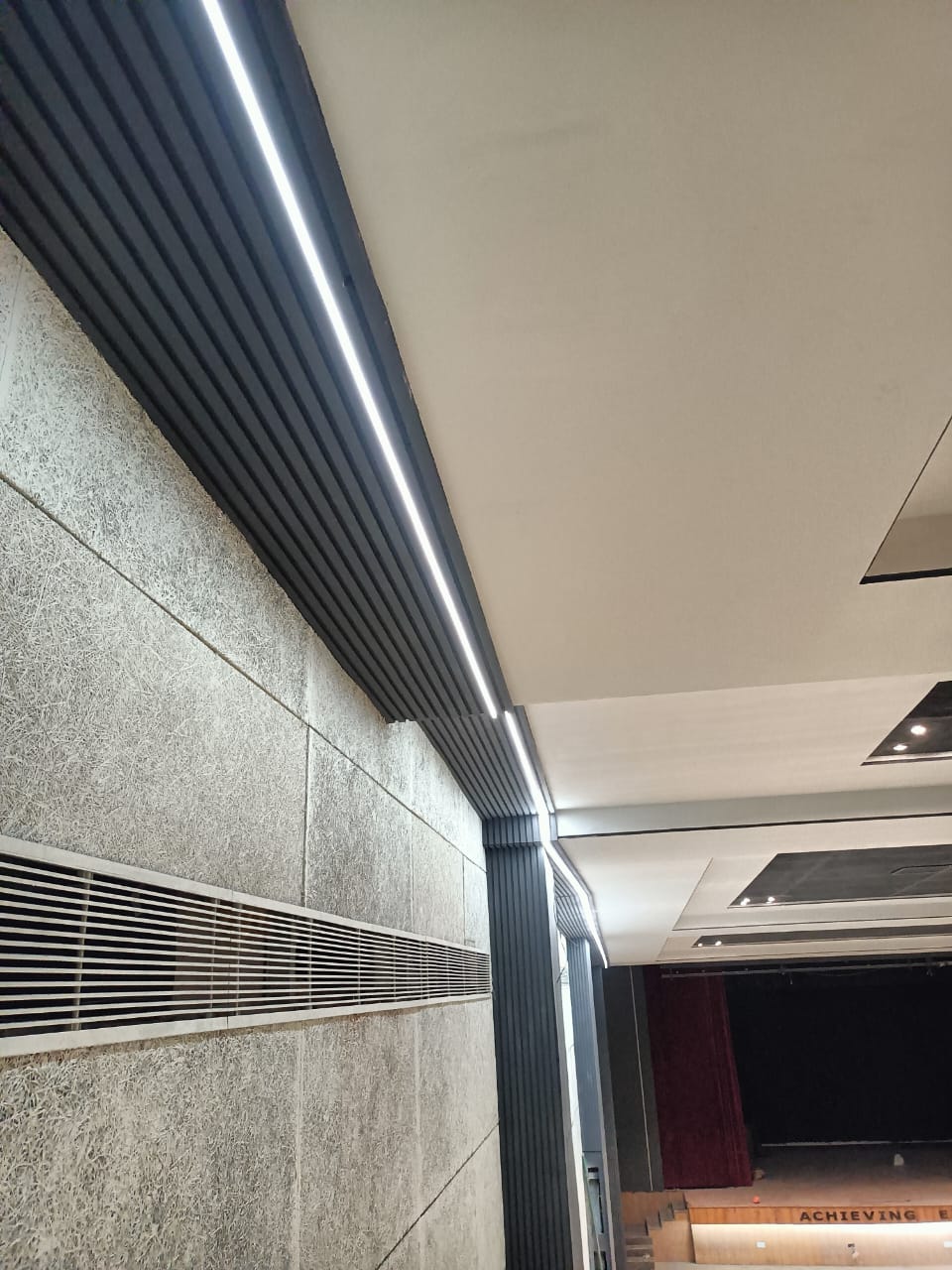
Pitch characteristics influence how a space is acoustically treated:
- Low-Pitch Sounds:
- More challenging to absorb due to longer wavelengths.
- Materials like thick panels or mass-loaded vinyl (MLV) are used to manage low frequencies.
- High-Pitch Sounds:
- Easier to absorb with lightweight materials like foam panels or fabric-covered walls.
How Pitch Affects the Listener
- Heart Rate and Blood Pressure:
- High-pitched sounds, especially sudden or sustained ones (e.g., alarms, sirens), can trigger the fight-or-flight response, increasing heart rate and blood pressure.
- Stress Response:
- Sharp, piercing tones can activate the sympathetic nervous system, causing stress, anxiety, and tension.
- Example: A baby’s cry is evolutionarily designed to evoke immediate attention and physiological arousal in caregivers.
- Hearing Sensitivity:
- Prolonged exposure to high-pitch sounds can cause ear fatigue or even damage to the auditory system (e.g., tinnitus).
- Calming Effect:
- Low-pitched sounds (e.g., a purring cat or ocean waves) are linked to the parasympathetic nervous system, inducing relaxation and reducing heart rate.
- Vibrational Impact:
- Deep bass frequencies, such as those in music or machinery, can resonate physically with the body, sometimes felt as vibrations in the chest or head.
- Somatic Effects:
- Extremely low frequencies (infrasound) may cause physical discomfort or unease, as they resonate with the body’s internal organs.
- Alertness and Attention:
- High-frequency sounds are sharp and penetrating, making them ideal for grabbing attention (e.g., warning signals).
- Emotion:
- Often associated with excitement, anxiety, or urgency. For instance:
- A high-pitch violin solo can evoke feelings of tension or thrill in a dramatic movie scene.
- Often associated with excitement, anxiety, or urgency. For instance:
- Discomfort:
- Prolonged or unexpected exposure can cause psychological discomfort or irritation.
- Alertness and Attention:
- Power and Authority:
- Deep, low-pitched sounds are perceived as dominant and commanding. Example: A deep male voice often conveys authority or confidence.
- Calmness and Comfort:
- Low-pitched sounds can have a grounding effect, often used in meditative music or nature sounds.
- Fear and Unease:
- In specific contexts (e.g., a growling animal or distant thunder), low-pitch sounds can evoke feelings of fear or danger due to evolutionary instincts.
Download PDF
Study notes for Architecture acoustics useful for students of architecture (B.Arch.) & Design (B.Des)