
Harshita Jain daughter of Ar. Manish Jain top CBSE Secondary School Examination (Class X) 2020 in Jaipur , she got 98.8% marks in the exam.
Newspaper cuttings


Harshita Jain daughter of Ar. Manish Jain top CBSE Secondary School Examination (Class X) 2020 in Jaipur , she got 98.8% marks in the exam.


Urban planners & Managers play a critical role in ensuring that urban areas are able to function sustainably. Since resources are finite, addressing environmental issues insufficiently has severe consequences: health hazards, loss of biodiversity, and ultimately, a lower quality of life. Internationally UN recognizes this issue and conduct following important conference / commission on environmentally sensitive urban planning & development.
Environmental planning is a process that involves the identification, evaluation, and management of natural and human-made resources in a given area. Its goal is to promote sustainable development by balancing economic, social, and environmental factors.
Environmental planning involves several steps, including:
Environmental planning is crucial for ensuring that communities develop in a sustainable and equitable manner. It helps to protect the environment, promote economic growth, and improve the quality of life for residents.
Here are some of the milestones of environmental planning in the world:
United Nations Conference on the Human Environment (Stockholm Conference) was an international conference convened under United Nations auspices held in Stockholm, Sweden from June 5-16, 1972. It was the UN’s first major conference on international environmental issues, and marked a turning point in the development of international environmental politics.
26 Principles of the Stockholm Declaration:
The World Commission on Environment and Development (WCED), also called the Brundtland Commission was an international commission that discussed and devised strategies for protecting the environment and promoting sustainable development.
The Brundtland Commission published its final report, Our Common Future, in 1987. Our Common Future stated that governments could not address environmental protection separately from related crises, such as economic development and energy production.
Our Common Future also outlined a blueprint for dealing with these interlocking crises simultaneously. It define Sustainable Development as:
“development that meets the needs of the present without compromising the ability of future generations to meet their own needs”
The findings and proposals of Our Common Future have shaped international environmental policy for the last two decades.
United Nations Conference on Environment & Development Earth Summit held in Rio de Janerio, Brazil, in 1992
Agenda 21 addresses the pressing problems of today and also aims at preparing the world for the challenges of the next century. objectives of Agenda 21 will require a substantial flow of new and additional financial resources to developing countries, in order to cover the incremental costs for the actions they have to undertake to deal with global environmental problems and to accelerate sustainable development. In the implementation of the relevant programme areas identified in Agenda 21, special attention should be given to the particular circumstances facing the economies in transition.
The Rio Declaration on Environment and Development is a set of 25 principles that recognize the importance of preserving the environment and set forth international guidelines for doing so.
Goal: Establishing a new and equitable global partnership through the creation of new levels of cooperation among States, key societies and people, Working towards international agreements which respect the interests of all and protect the integrity of the global environment and developmental system.
25 principles of Rio Declaration
PRINCIPLE 1 : Human beings are at the centre of concerns for sustainable development. They are entitled to a healthy and productive life in harmony with nature
PRINCIPLE 2 : States have, in accordance with the Charter of the United Nations and the principles of international law, the sovereign right to exploit their own resources pursuant to their own environmental and developmental policies, and the responsibility to ensure that activities within their jurisdiction or control do not cause damage to the environment of other States or of areas beyond the limits of national jurisdiction.
Housing and Environmental planning Study notes for M. plan Sem-I

Housing and Environmental Planning.pdf
Register as member and login to download attachment [pdf] by right-click the pdf link and Select “Save link as” use for Educational Purposes Only
Information on this site is purely for education purpose. The materials used and displayed on the Sites, including text, photographs, graphics, illustrations and artwork, video, music and sound, and names, logos, IS Codes, are copyrighted items of respective owners. Front Desk is not responsible and liable for information shared above.
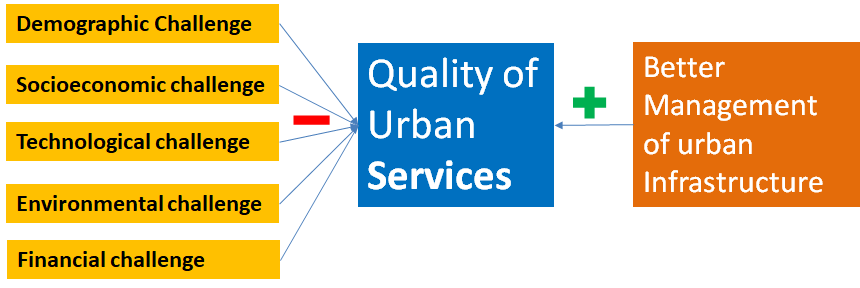
Housing is a basic need of man. In importance, it is third after food and clothing. “रोटी कपड़ा और मकान” Even the Neolithic man who lived between 10,000 and 2000 B.C. built durable habitation like pit dwellings, lake dwellings and beehive huts. However, its functions increased manifold over the years.
Housing means provision of comfortable shelter and such surrounding and basic services as like water, sanitation and social infrastructure like school, health centers or communication facilities as would keep the occupant fit and cheerful all the day of the year.
Housing defined as ‘shelter plus service‘ is a concept that combines housing with supportive services to help individuals and families achieve and maintain stable housing. This approach recognizes that simply providing a physical shelter is not enough to address the complex needs of many individuals who are experiencing homelessness or housing insecurity.
In the ‘shelter plus service’ model, housing is viewed as a fundamental human right and an essential component of overall health and well-being. Supportive services such as case management, healthcare, employment assistance, and mental health and substance abuse treatment are integrated into the housing program to address the underlying issues that may have contributed to homelessness or housing insecurity.
This approach has been shown to be effective in reducing homelessness and improving housing stability, particularly for vulnerable populations such as individuals with disabilities, veterans, and families with children. The ‘shelter plus service’ model has been implemented in various forms by governments, non-profit organizations, and private entities around the world, with a growing emphasis on the need for cross-sector collaboration and coordinated systems of care to ensure that individuals receive the right services at the right time.
Shelter as a basic requirement
Census Definition of House & Household
Rural and Urban areas – Census Definition
INDIAN CENSUS – House-listings
Census Meta Data on House-listing & Housing Census
Housing as Important component of Development
National Housing Policy & CM’s Jan Awas Yojana -2015
Social Factors Affecting Housing
Housing affordability : Affordable housing
Housing Standards – As per IS 8888 (part-I) : 1993 Indian Standard OF LOW INCOME HOUSING – GUIDE
Housing and Environmental Planning.pdf
Register as member and login to download attachment use this only for Educational Purpose
Information on this site is purely for education purpose. The materials used and displayed on the Sites, including text, photographs, graphics, illustrations and artwork, video, music and sound, and names, logos, IS Codes, are copyrighted items of respective owners. Front Desk is not responsible and liable for information shared above.

Indian society as Dhurjati Prasad Mukerji (D. P.) envisages is the result of the interaction between tradition and modernity. The encounter of tradition with modernization created certain cultural contradictions, adaptations and in some cases situations of conflict
Indian traditions are the resultants of certain historical processes. They actually construct the structure of Indian culture. These traditions belong to several ideologies such as Buddhism, Islam, Christianity, tribals and western modernity.
Dhirendra Nath Majumdar (1903-1960) says that Life is a process of adjustment and in its unfolding, it has thrown out individuals who are misfit and the latter have both helped and hindered cultural progress; the misfits are misfits in the context of a dynamic setting, and if only, the misfits could be fitted into the structure of life, the process that is life will continue to unfold itself, adjust and march as to man’s destiny through an integration and synthesis that constitute the core of the dynamics of culture change and culture crises.
A K Desai thinks that when traditions are linked with economic relations, the change in the latter would eventually change the traditions. It is in this context that he thinks that caste will disintegrate with the creation of new social and material conditions, such as industries, economic freedom, education, etc. His definition of tradition is a watershed. He does not trace it from caste, religion and ritual.
Tradition has a tendency to become entropic and inward looking. This is true of many local level traditions and sub traditions are stamped out and disappear without leaving much of a trace. Modernity, however, means different things in the North India and the South India. Thus modernity indicates a type of society that is more developed relative to other societies.
In Sociology, neighbourhood is a localities in urban areas which are characterized by a common sense of identity and usually a common life style.
Traditional neighbourhoods denote old parts of the city. In many American studies, these parts are referred to as ‘inner city areas.’ Immigrant population with low quality of amenities and dilapidated or deteriorating housing conditions, no governmental investment, marks these localities. As the city grows the lower middle classes move out of the inner city areas and the new immigrants move in theses dwellings with low rent. Architecturally, inner city areas show traditional styles and forms of using space. They facilitate older styles of interactions and social networks.
Middle classes and the rich population on the other hand inhabit outer city areas. These localities have more amenities, large plots of land, more services and are scarcely populated. These are more modern neighbourhoods with up-market styles and forms of spatial use. In some cities the traditional neighbourhoods have been preserved as architectural heritage sites.
Some aspects of modernity include:
There are, however, other defining characteristics of modernity which include disenchantment with the world
Giddens position conflicts with the contention that society has entered into a post modern world. Thus modernity witnesses tremendous increases in the scope, pace and depth of change relative to systems that preceded it. Further the path or trajectory of change is not linear, going forward step by step. For Giddens modernity implies
Giddens theory of structuration and its basic components adequately describe modernity. These elements are:
Socio-Economic base for Planning Study notes for M. plan Sem-I

Socio-Economic base for Planning.pdf
Socio-Economic base for Planning-2.pdf
Register as member and login to download attachment [pdf] by right-click the pdf link and Select “Save link as” use for Educational Purposes Only
Information on this site is purely for education purpose. The materials used and displayed on the Sites, including text, photographs, graphics, illustrations and artwork, video, music and sound, and names, logos, IS Codes, are copyrighted items of respective owners. Front Desk is not responsible and liable for information shared above.
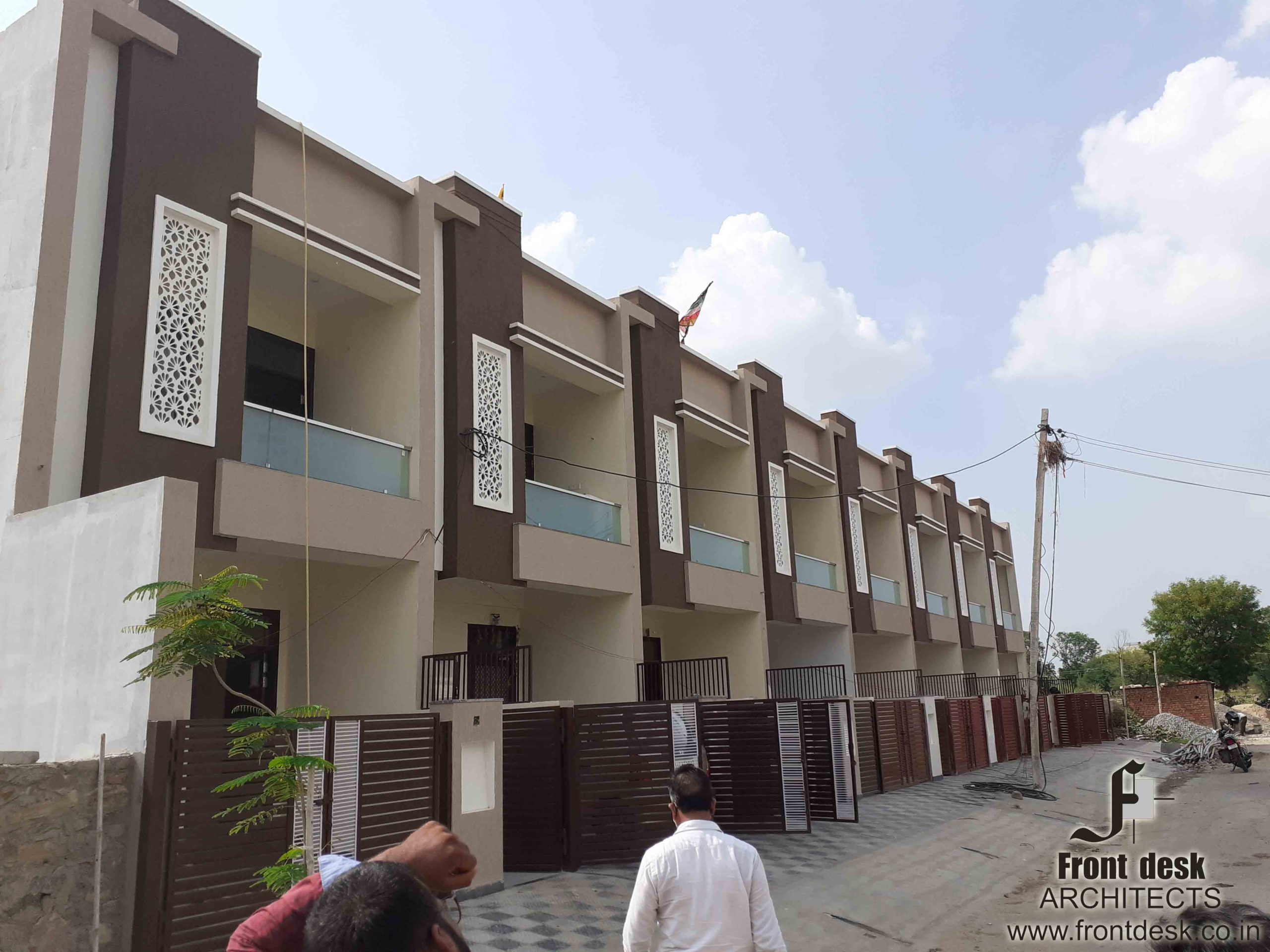
The city passed through a number of transformations since its inception in human history. Transformation implies changes over time; the present urban fabric is resultant of successive generations of settlers who left their mark in physical structure as well as political, economic and social institutions.
India is moving fast towards urbanization. According to 2011 census, 29.5% of total population lives in urban areas. Growth rate of urban population has been 2.27% in the year 2010-2011. “India’s urban population will more than double to over 600 million by 2035 as increasing number of people migrate to cities because of better infrastructure and employment opportunities.”
Urbanization is not a side effect of economic growth; it is an integral part of the process. As in most countries, India’s urban areas make a major contribution to the country’s economy. Indian cities contribute to about 2/3 of the economic output, host a growing share of the population and are the main recipients of FDI and the originators of innovation and technology
urban transformation, possibly the largest national urban transformation of the 21st century. This would pose unprecedented challenges to India’s growing cities and towns in providing housing and infrastructure (water, sewerage, transportation, etc.), and addressing slums. Already, slums now account for about 26% of all urban population in cities. In Mumbai, more than half the population lives in slums, many of which are situated near employment centers in the heart of town, unlike in most other cities in developing countries.
Due to rapid urbanization and population growth crime has become one of the most serious social problems. To tackle and reduce the negative effects of crime on human beings, grater regulatory controls are needed which require more participation of individuals and community. Crime is influenced by multiplicity of factors such as economic, social and governmental as well as physical elements Safety and security are basic human needs.
Human behaviour takes place in space, and the spatial layout of the environment provides various opportunities for social interaction. The interaction between people can create safe or unsafe communities which are a foundational part of society’s welfare.
This theory was established by Ar. Oscar Newman in 1972. It assures a definite relationship of crime rates with urban design. According to the defensible spaces theory, physical layout of communities can make occupants control the areas. It creates the physical appearance of a social bond that defends itself Newman named the related physical strategies in terms of crime prevention as “target hardening”.
Socio-Economic base for Planning Study notes for M. plan Sem-I

Socio-Economic base for Planning.pdf
Socio-Economic base for Planning-2.pdf
Register as member and login to download attachment [pdf] by right-click the pdf link and Select “Save link as” use for Educational Purposes Only
Information on this site is purely for education purpose. The materials used and displayed on the Sites, including text, photographs, graphics, illustrations and artwork, video, music and sound, and names, logos, IS Codes, are copyrighted items of respective owners. Front Desk is not responsible and liable for information shared above.

Social structure is a phenomenon that is closely associated with space. The structure of a society is physically exhibited in spatial forms and patterns. In other words, social structure is reflected in space. From ancient times, it can be observed that social structure has had definite spatial patterns. The group belonging to the upper caste or the group that was predominant, occupied the area that surrounded the nucleus. In this case, the nucleus can be a temple, mosque or a church. The other groups were distributed around this central area based on the caste and the status they enjoyed in the society.
This can be seen in both urban and rural communities, However it is much stronger in rural Communities. Spatial distribution of population in rural communities is influenced by castes and one tends to see clusters of population belonging to the same caste and social structure in a particular location.
Important characteristic that is to be found in urban communities is that spatial locations are also influenced by economic factors rather then by castes . The setting of a group of people belonging to a particular type of social structure at a particular location at a point of time ensures that the subsequent generations belonging to the same social structure would settle at the same location.
Thus social structure and spatial forms and patterns are irrevocably intertwined with one another with the physical representation of the former giving rise to the latter
Area of residence is an important parameter of social structure demarcates the lines of differentiation among people created in their social interaction. If the various groups in a city are located in different neighbourhoods, most encounters will involve members of the same group, and there will be little opportunity for intergroup contact.
Suttles (1972) says that Residential segregation whereby the city is partitioned into several village-like areas where the groupings of people are of manageable proportions is a means of social control to cope with the heterogeneity and potential for conflict and exploitation that exist in a city. The residents of these distinctive areas are “distinctive earmarks which the residents, outsiders and external organizations seize upon to sort one another out for selective treatment”
Social roles refer to the set of behaviors that are expected of individuals within social institutions. Society is like a stage and individuals are like actors within a society whereby, they have to play different roles within different social institutions. Each individual hold different status within distinct institutions of society. Roles are positions in a social group. Father, mother, son, daughter, are examples of roles within the family
A role is a comprehensive pattern of behaviour that is socially recognized, providing a means of identifying and placing an individual in a society.
Role conflict occurs when members of the group have different definitions or expectations of someone occupying a role. Role conflict can occur, for example, when a parent coaches a cricket team that includes that parent’s son. The role of the parent can conflict with the role of the coach who needs to be objective when determining the positions and batting lineup, for example, along with the need to interact with all the children equally.
Role strain
When individual is stressed out due to excessive responsibilities associated with his statuses within different instructions of society is called role strain.
In all of the many social groups that we as individuals belong to, we have a status and a role to fulfill.
Status is our relative social position within a group, while a role is the part our society expects us to play in a given status.
Broadly speaking, there are two kinds of status, achieved status and ascribed status.
Achieved Status
An achieved status is one that is acquired on the basis of merit; it is a position that is earned or chosen and reflects a person’s skills, abilities, and efforts. Being a professional athlete, for example, is an achieved status, as is being a lawyer, college professor, or even a criminal.
Ascribed Status
An ascribed status, on the other hand, is beyond an individual’s control. It is not earned, but rather is something people are either born with or had no control over. Examples of ascribed status include sex, race, and age. Children usually have more ascribed statuses than adults, since they do not usually have a choice in most matters.
In India, ascribed, rather than achieved, social status has been strongly reinforced for more than 3,000 years and permeates most areas of life even today. As a result, social mobility has been very difficult to achieve until recent generations. Even now, it is limited for those at the bottom of society. At the heart of the Indian ascription system are castes These are carefully ranked, rigidly hereditary social divisions of society.
INDIAN CASTES TRADITIONAL ROLE IN SOCIETY
1. Brahman priests and teachers
2. Kshatriya rulers, warriors, and landowners
3. Vaishya farmers, merchants and artisans
4. Shudra serfs or laborers
5. Scheduled castes (Harijan ,Dalit ) “polluted” laborers
Class
The society is stratified in various class groups-by sex, age, race, ethnicity, primitive and modern, rich and poor. Such stratifications are spontaneous formation expressive of social attitudes based on social or financial status. Status is a symbol which stands for the elite and the masses, the rich and the poor. the ruler and the ruled. the educated and the uneducated.
Caste
Whereas, a caste is a closed class or social group. There are no purely free-entry classes, nor purely closed castes. Thus there is some mobility within a caste- structured society. Members of inferior castes always seek to move upwards. Membership of caste is compulsory arid it is not matter of choice
Social interaction is the process of reciprocal influence exercised by individuals over one another during social encounters. Usually it refers to face-to-face encounters in which people are physically present with one another for a specified duration.
Society is created by humans and human interaction, which they call habitualization. Habitualization describes how “any action that is repeated frequently becomes cast into a pattern, which can then be … performed again in the future in the same manner and with the same economical effort”
Social interaction is in crucial respects symbolic interaction–interaction which is mediated by the exchange and interpretation of symbols.
In symbolic interaction, people contrive to reach a mutual understanding of each other and of the tasks at hand through the exchange and interpretation of symbols. Only on this basis can a coordinated action be accomplished.
The process of communication is the central quality of the human social environment.
Social interaction depends on communication.
Social System is dynamic complexity of various group and institution.
A social system is an interdependent set of cultural and structural elements that can be thought of as a unit.
A social system may be defined as a plurality of individuals interacting with each other according to shared cultural norms and meanings.
Structure of Social System
Durkheim says “ we may consider social norms and values as ‘things’ and hence parts of the social structure”.
Radcliffe-Brown has defined social structure :
“The components of social structure are human beings, the structure itself being an arrangement of persons in relationship institutionally defined and regulated”.
Functions of Social System:
1. Adaptation:
The problems of adapting the social system to its physical and social environments. The most important problems in this respect are procuring resources needed for its activities, providing for protection against physical and social threats, and developing information relating to these.
2. Goal Attainment:
The organisational problem of effecting co-ordination in any collective tasks directed outside the system itself.
3. Integration:
The internal problem of maintaining satisfying relations among the interacting, members and avoiding disrupting conflicts. For small groups, this concerns inter-personal relations. For larger organisation, it concerns inter-group relations.
4. Latent Pattern Maintenance:
The internal organisational problem of ordering activity patterns of the system, and also of adjusting the role demands on members, so that these are compatible with their other role commitments.

Elements of social structure
In social structure the human beings organize themselves into associating of pursuit of some object or objects. This can be fulfilled if the social structure is based on some principles.
(i)Normative System : This presents the society with ideals and values. The people attach emotional importance to these norms. The institutions and associations are interrelated according to these norms. The individuals perform their roles in accordance with the accepted norms of society.
ii)Position system : this refer to the status and roles of the individuals. The desires, aspirations and expectations of individuals are varied, multiple and unlimited. So, theses can be fulfilled only by if the members of society are assigned different role according to their capacities and capabilities.
iii)Sanction system : The integration and coordination of different parts of social structure depend upon conformity of social norms. The non-conformists are punished by the society. The effectiveness of social structure depends on effectiveness of its sanction system.
(iv)The system of anticipated responses : The anticipated response system calls upon the individuals to participate in the social system. His preparation sets the social structure in motion.
V). Action system : It is the object or goal to be arrived at by social structure. The whole social structure revolves around it. The action is the root cause which weaves the web social relationships and sets the social structure in motion.
Types of social structure :
Talcott Parsons has described 4 principal types of social structure.
1. The universalistic achievement pattern : This is combination of value patterns which sometimes are opposed to the value of social structure built mostly about kinship, community , class and race. The choice of goal by the individual must be accordance with the universalistic values. His pursuits are defined by universalistic moral norms. Such a system is dynamically developing norms. Such a system is dynamically developing system with an encouragement for initiative.
2. Universalistic ascriptions pattern-under this type of social structure the elements of value-orientation are dominated by the elements of ascription. Therefore in such a social structure strong emphasis is laid on the status of the individual rather than on his specific achievements. The emphasis is on what an individual is rather than on what he has done. Status is ascribed to the group rather than to the individuals. The individual derives his status from his group. In this type of social structure all resources are mobilized in the interest of the collective ideal.
3. Particularistic-Achievement Pattern-This type combines achievement values with particularim. The primary criterion of valued achievement is found not in universalistic terms such as conformity to a generalized ideal or efficiency but these are focussed on certain points of reference within the relational system itself or are inherent in the situation. The emphasis on achievement leads to the conception of a proper pattern of adaption which is a product of human achievement and which are maintained by continuous efforts.
4. Particularistic-Ascriptive pattern- In this type also the social structure is organized around the relational reference points notably those of kinship and local community but it differs from the particularistic achievement type in as much as the relational values are taken as given and passively adapted to rather than make for an actively organized system. The structure tends to be traditionalistic and emphasis is laid on its stability.
Socio-Economic base for Planning Study notes for M. plan Sem-I

Socio-Economic base for Planning.pdf
Socio-Economic base for Planning-2.pdf
Register as member and login to download attachment [pdf] by right-click the pdf link and Select “Save link as” use for Educational Purposes Only
Information on this site is purely for education purpose. The materials used and displayed on the Sites, including text, photographs, graphics, illustrations and artwork, video, music and sound, and names, logos, IS Codes, are copyrighted items of respective owners. Front Desk is not responsible and liable for information shared above.

Sociologists study all aspects and levels of society.
A Society is a group of people whose members interact, reside in a definable area, and share a culture.
A Culture includes the group’s shared practices, values, beliefs, norms and artifacts.
Community : The term community is one of the most elusive and vague in sociology and is by now largely without specific meaning. At the minimum it refers to a collection of people in a geographical area. Three other elements may also be present in any usage.
(1) Communities may be thought of as collections of people with a particular social structure; there are, therefore, collections which are not communities. Such a notion often equates community with rural or pre-industrial society and may, in addition, treat urban or industrial society as positively destructive.
(2) A sense of belonging or community spirit.
(3) All the daily activities of a community, work and non work, take place within the geographical area, which is self contained.
A social group consists of two or more people who interact with one another and who recognize themselves as a distinct social unit. The definition is simple enough, but it has significant implications. Frequent interaction leads people to share values and beliefs. This similarity and the interaction cause them to identify with one another. Identification and attachment, in turn, stimulate more frequent and intense interaction. Each group maintains solidarity with all to other groups and other types of social systems.
Groups are among the most stable and enduring of social units. They are important both to their members and to the society at large. Through encouraging regular and predictable behavior, groups form the foundation upon which society rests. Thus, a family, a village, a political party a trade union is all social groups. These, it should be noted are different from social classes, status groups or crowds, which not only lack structure but whose members are less aware or even unaware of the existence of the group. These have been called quasi-groups or groupings. Nevertheless, the distinction between social groups and quasi-groups is fluid and variable since quasi-groups very often give rise to social groups, as for example, social classes give rise to political parties.
If all groups are important to their members and to society, some groups are more important than others. Early in the twentieth century, Charles H. Cooley gave the name, primary groups, to those groups that he said are characterized by intimate face-to-face association and those are fundamental in the development and continued adjustment of their members. He identified three basic primary groups, the family, the child’s play group, and the neighborhoods or community among adults.
A primary group is typically a small social group(small-scale society) whose members share close, personal, enduring relationships. These groups are marked by members’ concern for one another, in shared activities and culture. Examples include family, childhood friends, and highly influential social groups
Secondary groups, characterized by anonymous, impersonal, and instrumental relationships, have become much more numerous. People move frequently, often from one section of the country to another and they change from established relationships and promoting widespread loneliness.
A social institution is a complex, integrated set of social norms organized around the preservation of a basic societal value. Obviously, the sociologist does not define institutions in the same way as does the person on the street. Lay persons are likely to use the term “institution” very loosely, for churches, hospitals, jails, and many other things as institutions.
Sociologists often reserve the term “institution” to describe normative systems that operate in five basic areas of life, which may be designated as the primary institutions. (1)In determining Kinship; (2)in providing for the legitimate use of power; (3)in regulating the distribution of goods and services; ( (4)in transmitting knowledge from one generation to the next; and (5)in regulating our relation to the supernatural.
In shorthand form, or as concepts, these five basic institutions are called the family, government, economy, education and religion.
All social group posses Institution
Institutions are classified into (i)Primary institutions (ii)Secondary institutions.
As societies grew in size and complexity, institutions became progressive and more differentiated. Accordingly, a large number of institutions are evolved to cater to the secondary needs of people. They may be called secondary institutions.
The secondary institutions of •Economics are property, trading, credit, banking etc. •Religion are church, temple, mosque, totem, taboo etc. •Education are school, college, university etc. •Government are interest groups, party system, democracy etc.
Sumner classification of institutions are :
•the crescive institutions
•the enacted institutions.
Those that evolved or developed naturally, unconsciously and even spontaneously are called by him cursive. Those institutions that are consciously and purposefully and in a planned way established are referred to by him as enacted.
A family is the most primary institution and family and marriage are the most pervasive social institution. The sex relationship is the most primary and an essential foundation of relationship. In a family there is a sense of belongingness. The institution of family rests on the “consciousness of kind” Virtually everyone, in all societies, is brought up in a family which is the first nursery of socialisation and education.
There is a great variation in the family and marriage patterns across different cultures. The social web of family institution gets extended with its vast connection with other kin, whom one is permitted to marry.
And the family relationships are recognised within wider kinship groups. Sociologists and Anthropologists identify those families as nuclear families which consists of wife and husband living together in a household with their own or adopted offsprings. The extended family (Joint Family) may be a group of a few generations living within the same dwelling unit. It may include grand parents and great grand parents, bothers and their wives. sisters and their husbands, aunts, uncles, nieces and nephews
A family in which a person is born is called the family of orientation and the family in which a person enters as an adult and within a new generation of children is brought up is called a family of procreation. There is another dimension of family.
When the bridegroom moves to live with bride’s parents, it is called matrilocal family. Contrary to this, when bride moves to live with bridegrooms family it is called patrilocal family.
A matrifocal family structure is one where mothers head families and fathers play a less important role in the home and in bringing up children. Opposite to this in patrifocal family is headed and centred on Father or Patriarch.
Monogamy : The family where an individual male marries ii single female is called a monogamous marriage. But polygamy is a type of marriage which allows a husband or wife to have more than one spouse. Polygamy is of two kinds-polygyny and polyandry.
In polygyny a man marries more than one women
polyandry in which a woman may have more than one husband.
A Government is an institution entrusted with making and enforcing the rules of a society as well as with regulating relations with other societies. In order to be considered a government, a ruling body must be recognized as such by the people it purports to govern. A person or group that considers itself the leading body of a society has no power if the members of the society do not recognize the person or group as such.
Types of Governments
Most of the world’s governments fall into one of four categories: monarchy, democracy, authoritarianism, or totalitarianism.
Religion describes the beliefs, values, and practices related to sacred or spiritual concerns.
Religion is a social institution because it includes beliefs and practices that serve the needs of society. Religion is also an example of a cultural universal because it is found in all societies in one form or another.
Barkan and Greenwood 2003 says
Religious experience refers to the conviction or sensation that one is connected to “the divine.” This type of communion might be experienced when people are praying or meditating.
Religious beliefs are specific ideas that members of a particular faith hold to be true, such as that Bharmaji has create world Vishuji run the world etc., or believing in reincarnation. Another illustration of religious beliefs is that different religions adhere to certain stories of world creation.
Religious rituals are behaviours or practices that are either required or expected of the members of a particular group, such as Aarti, Abhishek etc.
The social norm, or simply “norm,” is arguably the most important concept in sociology.
Sociologists believe that norms govern our lives by giving us implicit and explicit guidance on what to think and believe, how to behave, and how to interact with others.
We learn norms in a variety of settings and from various people, including our family, our teachers and peers at school, and members of the media. There are four key types of norms, with differing levels of scope and reach, significance and importance, and methods of enforcement. These norms are, in order of increasing significance, 1.Folkways 2.Mores 3.Taboos 4.Laws
1. Folkways
William Graham Sumner (1906) says Folkways are norms that stem from and organize casual interactions, and emerge out of repetition and routines. We engage in them to satisfy our daily needs, and they are most often unconscious in operation, though they are quite useful for the ordered functioning of society.
2 Mores
Mores are more strict than folkways, as they determine what is considered moral and ethical behavior; they structure the difference between right and wrong. People feel strongly about mores, and violating them typically results in disapproval or ostracizing. As such, mores exact a greater coercive force in shaping our values, beliefs, behavior, and interactions than do folkways.
Religious doctrines are an example of mores that govern social behavior.
3. Taboos
A taboo is a very strong negative norm; it is a prohibition of certain behavior that is so strict that violating it results in extreme disgust and even expulsion from the group or society. Often times the violator of the taboo is considered unfit to live in that society. For instance, in some Muslim cultures, eating pork is taboo because the pig is considered unclean. At the more extreme end, incest and cannibalism are both considered taboos in most places. (Cannibalism is the act of consuming another individual of the same species as food.)
4. Laws
A law is a norm that is formally inscribed at the state or federal level and is enforced by police or other government agents. Laws exist to discourage behavior that would typically result in injury or harm to another person, including violations of property rights. Those who enforce laws have been given legal right by a government to control behavior for the good of society at large. When someone violates a law, a state authority will impose a sanction, which can be as light as a payable fine or as severe as imprisonment.
Socio-Economic base for Planning Study notes for M. plan Sem-I

Socio-Economic base for Planning.pdf
Socio-Economic base for Planning-2.pdf
Register as member and login to download attachment [pdf] by right-click the pdf link and Select “Save link as” use for Educational Purposes Only
Information on this site is purely for education purpose. The materials used and displayed on the Sites, including text, photographs, graphics, illustrations and artwork, video, music and sound, and names, logos, IS Codes, are copyrighted items of respective owners. Front Desk is not responsible and liable for information shared above.

The word “sociology” is derived from the Latin word socius (companion) and the Greek word logos (speech or reason), which together mean “reasoned speech about companionship”.
The sociologist Dorothy Smith (1926 – ) defines the social as the “ongoing concerting and coordinating of individuals’ activities”
Smith (1999 ) says Sociology is the systematic study of all those aspects of life designated by the adjective “social.” These aspects of social life never simply occur; they are organized processes. They can be the briefest of everyday interactions—moving to the right to let someone pass on a busy sidewalk, for example—or the largest and most enduring interactions—such as the billions of daily exchanges that constitute the circuits of global capitalism.
Think about the T-shirts in your drawer at home. What are the sequences of linkages and social relationships that link the T-shirts in your chest of drawers to the dangerous and hyper-exploitive garment factories in rural China or Bangladesh? These are the type of questions that point to the unique domain and puzzles of the social that sociology seeks to explore and understand.
The Sociological Imagination is a book written by sociologist C. Wright Mills and published in 1959. His goal in writing this book was to try to reconcile two different and abstract concepts of social reality – the “individual” and “society.” In doing so, Mills challenged the dominant ideas within sociology and critiqued some of the most basic terms and definitions.
The sociological imagination is the ability to see things socially and how they interact and influence each other. To have a sociological imagination, a person must be able to pull away from the situation and think from an alternative point of view.
Sociological knowledge is different from theological and philosophical observations. Likewise sociology is different from common sense observations. The common sense explanations are generally based on what may be called
‘naturalistic’ and/or individualistic explanation. A naturalistic explanation
for behaviour rests on the assumption that one can really identify ‘natural’
reasons for behaviour. Sociology has a body of concepts, methods and data, no matter how loosely coordinated. This cannot be substituted by common sense
SOCIOLOGY AND ITS RELATIONSHIP TO OTHER SOCIAL SCIENCE DISCIPLINES
Sociology is one of a group of social sciences, which also includes anthropology, economics, political science, and history. The divisions among the various social sciences are not clearcut, and all share a certain range of common interests, concepts and methods. It is therefore very important to understand that the distinctions of the disciplines are to some extent arbitrary and should not be seen in a straitjacket fashion.
A standard western textbook definition of sociology समाज शास्त्र is “the study of human groups and societies, giving particular emphasis to the analysis of the
industrialised world” (Giddens 2001).
A standard western definition of social anthropology सामाजिक मानविकी would be the study of simple societies of non-western and therefore “other” cultures
M. N Srinivas (1966 ) map the trajectory:
In a country such as India, with its size and diversity, regional, linguistic, religious, sectarian, ethnic (including caste), and between rural an urban areas there are a myriad ‘others’ In a culture and society such as a india’s ‘the other’ can be encountered literally next door…
No rigid divide exists between sociology and social anthropology in India, a characteristic feature of the two subjects in many western countries. Perhaps the very diversity of the modern and traditional, of the village and the metropolitan in India accounts for this.
In 1920 first department of sociology was established at university of Bombay by Professor Patrick Geddes. Sociology studies in urban context starts after 1971 census which recorded high rate of growth of urban population. (109 million ). The Study of Urban sociology got importance with rising problems of rural-urban migration , urban development and other related areas such as demography, slums, stratification, education, ethnic conflict and movements, kinship, religion, politics, economy, social problems and impact of urbanization on rural areas. In 1986 the national commission on urbanization established under the chairmanship of Charles Correa. After the UNCHS habitat 1996 Conference Government of India encourage city studies and network of Local Urban Observatories (LUOs) and National Urban Observatory (NUO) programme are start in India.
Socio-Economic base for Planning Study notes for M. plan Sem-I

Socio-Economic base for Planning.pdf
Socio-Economic base for Planning-2.pdf
Register as member and login to download attachment [pdf] by right-click the pdf link and Select “Save link as” use for Educational Purposes Only
Information on this site is purely for education purpose. The materials used and displayed on the Sites, including text, photographs, graphics, illustrations and artwork, video, music and sound, and names, logos, IS Codes, are copyrighted items of respective owners. Front Desk is not responsible and liable for information shared above.

Contact us on +91-141-6693948
architect@frontdesk.co.in