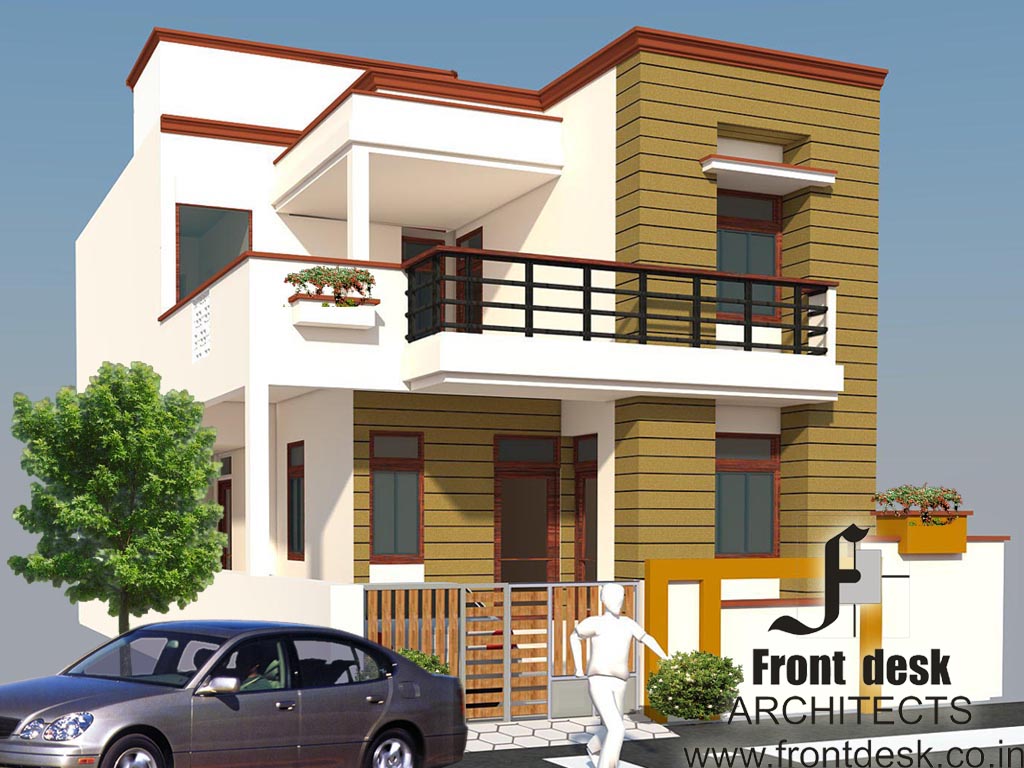
Project Details
Project Stage : Completed in 2014
Built-Up Area : 3,000 sqft
Address : Tulsi Marg, Sector 9, Mansarovar, Jaipur, Rajasthan 302020
Satellite Location : 26.849644, 75.771524
Role : Architectural Consultancy

Project Stage : Completed in 2014
Built-Up Area : 3,000 sqft
Address : Tulsi Marg, Sector 9, Mansarovar, Jaipur, Rajasthan 302020
Satellite Location : 26.849644, 75.771524
Role : Architectural Consultancy
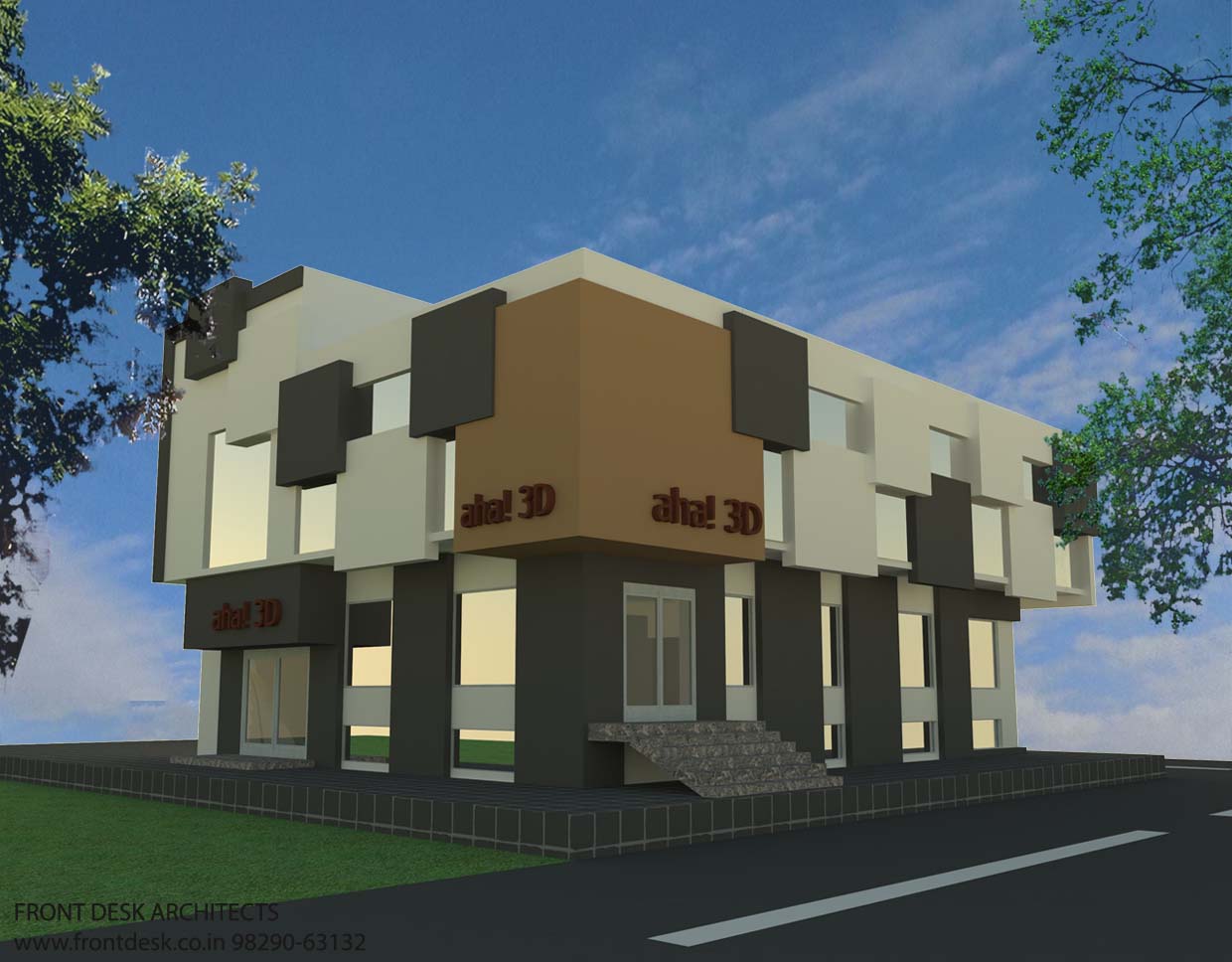
Project Stage : Completed in 2018
Built-Up Area : 10,000 sqft
Developer : Aha 3D Innovations (P) Ltd.
Address: I/F-2, Solitaire Park · Ajmer Road, Bagru · Jaipur 303007 · India
Satellite Location : 26.813586, 75.553134
Role : Architectural Consultancy
Aha3D manufacturers commercial 3D printers and prototyping printers. The company’s products include RepRap 3D printers, Reality 3D series and ProtoCentre series, a dual extruder 3D printer.
Use of courtyard and other passive design feature to increase daylight and there no need of artificial light in day time
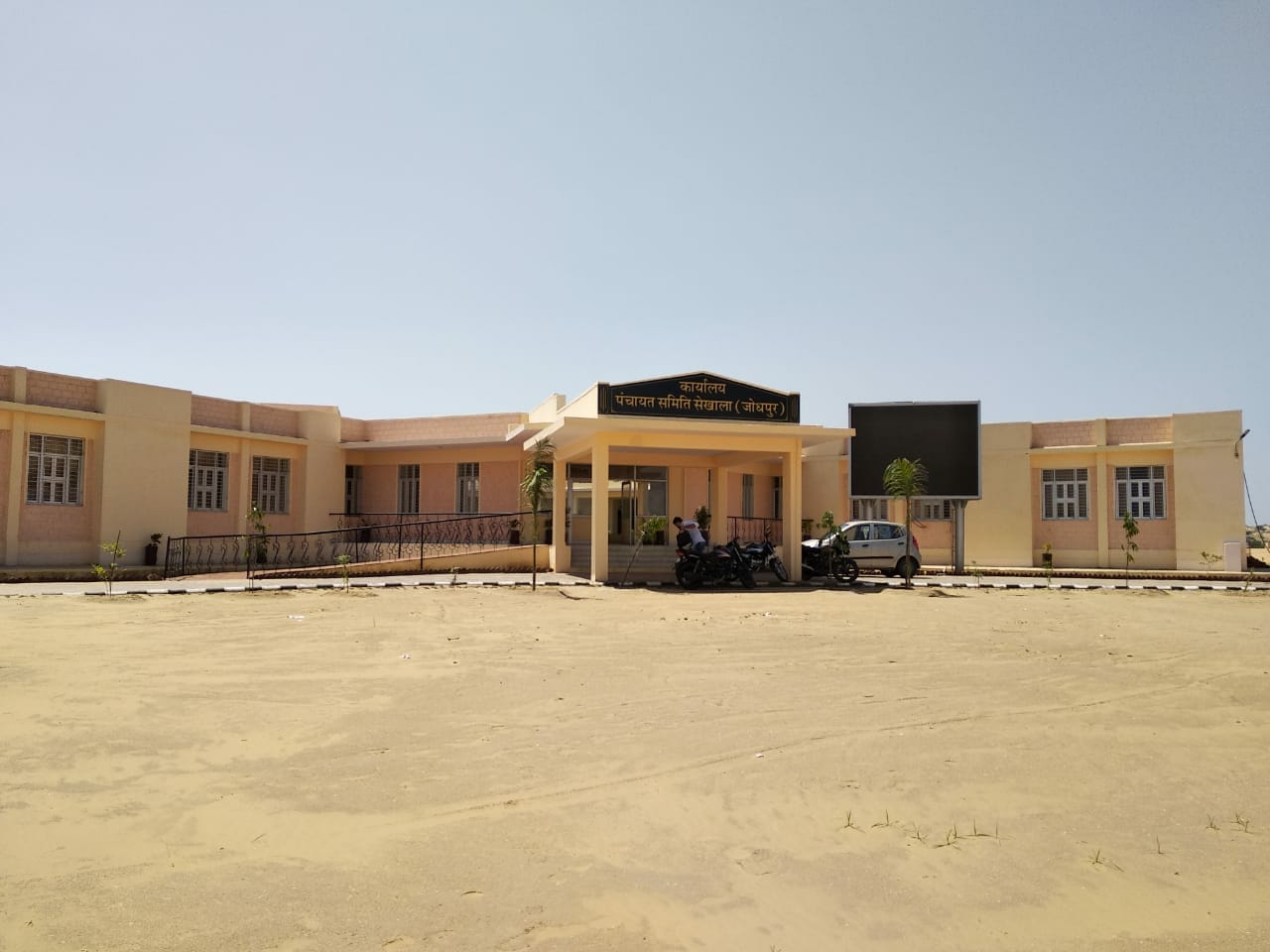
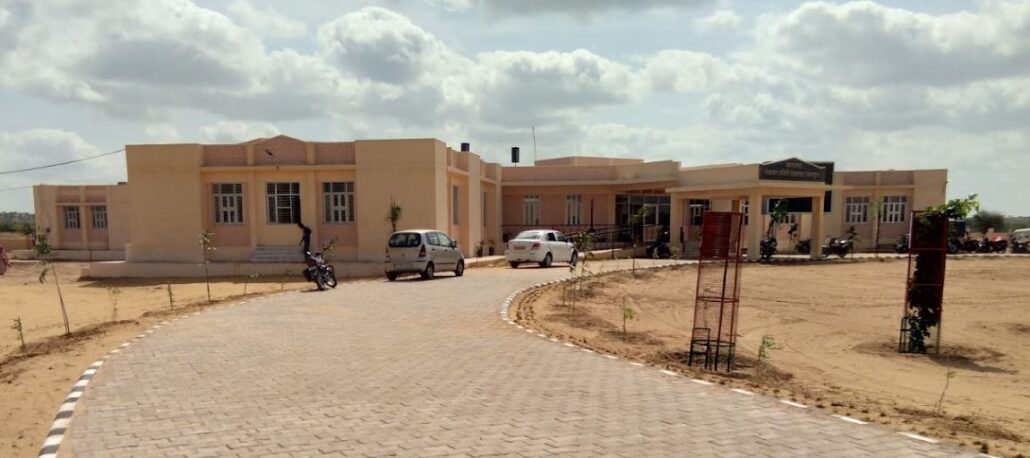
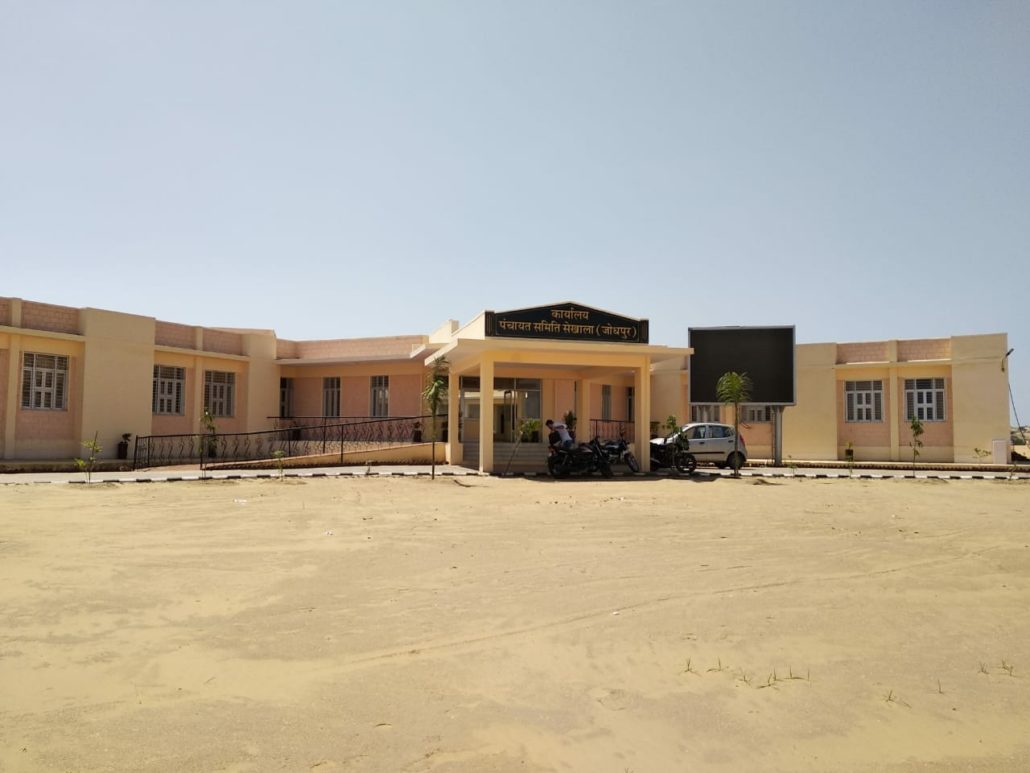
Project Stage : completed in 2018
Built-Up Area : 14,000 sqft
Organization : Panchayati Raj Department, Government of Rajasthan
Address: Jaisalmer – Jodhpur Road, Shekhala, Rajasthan 342025
Satellite Location : 26.517259, 72.391498
Role : Architectural Consultancy
Google Location Map
The ancient scriptures describe three different conditions regarding the position of Vaastupurusha’s head:
1. Nitya(daily) vaastu, wherein Vaastupurusha alternates the position of his head between right and left approximately every three hours.
2. Chara (moving) vaastu, wherein Vaastupurusha changes his head position once every three months.
3. Sthira (stable) vaastu, wherein Vaastupurusha’s head is permanently established towards the Northeast direction.
It refers to daily movement of vastu purush. The gaze of vastu purush changes every three hours in a day, He completes one full rotation of 360° in a day, remaining for three hours each in all of the eight directions. Human mind and body also undergo changes on a daily cycle basis. The energy and alertness of mind reaches its lowest peak when we go to bed.
Second type of vastu is called chara vastu or moving body. The vastu purush lies on his side in one direction for full three months and keeps on rotating in a clockwise direction.
it is clear from the above table that change of position of vastu purush is closely linked to the various seasonal change. Seasons change and so changes the intensity of the forces in a span of one year. These seasonal changes, in turn, have great effect on human body. So happens with the body of vastu purush. Different seasons have different level and direction of pranic forces. Ayurveda – the science of happy and long life – prescribes special diet for different seasons.
In the months of mid August to November (Bhadrapad, Ashwin, and Kartik) Vaastupurusha stay in this position pointing your head towards East and feet towards West,
In the months of mid November to February (Margashirsh, Poush and Magh) pointing head towards South and feet towards North while looking towards West.
In the months of mid February to May (Falgun, Chaitra and Vaishak) pointing head towards West and feet towards East while looking towards North.
In the months of mid May to August (Jeshtha, Ashadh and Shrawan) stay lying down keeping your head towards North and feet towards South while looking towards East.
You have to register as member and login to see above images attached
The positions of vastu purush along NE and SW is supposed to be his permanent body position. This is the most impertinent vastu position. It is the sthira or permanent position of any construction for all seasons throughout the year. His head is on the NE, his right arm on the SE, his feet are on the SW and his left arm is on the NW.
We can related Vastu principals with our life style in following manner
North-East: In morning, from 3:00 am to 6:00 am, Sun is in the North-East part of house. This patch of time between 3:00 am to 6:00 am is called as Brahma Mahurat and is best for meditation, yoga, exercise or study. Hence North-East part of a home is best suited for a Puja/prayer room, living room or even study room.
East: The Sun remains from 6:00 am to 9:00 am in East portion of a home, this time is best to get ready for the day ahead and hence East is best suitable for a bathroom (only bathroom, not toilet). However, this portion can also be used for living room, unmarried children’s bedroom, guest bedroom, dining room, Puja room and even study room.
South-East: 9:00 am to 12:00 noon is the time when Sun is in the South-East part of home and this time is best for preparing food and going to job. Hence this location is best suited to place a kitchen, office or unmarried son’s bedroom in a home.
South: The time between 12 noon and 3:00 pm is time to work, during this time the Sun is in southern portion of a building and hence this location is good for office. In this portion, the intensity of sunlight is very high and hence South can also be used as a store room, staircase and even toilets.
South-West: Post lunch is the time to rest i.e. from 3:00 pm to 6:00 pm. During this time the sun is in South-West portion of a home and hence this location is best for master bedroom. Also a staircase or strong room can be located here.
West: The time between 6:00 pm to 9:00 pm is best time to relax and dine. That’s why this is the best location to have dining room in a home. One can also use this portion to locate children’s bedroom, prayer room, study room or a staircase.
North-West: The time between 9:00 pm to 12:00 am is the time to relax and sleep. Hence this location is best suited for a bedroom. However, this portion can also be used as living room.
North: The time between 12:00 am and 3:00 am is the time of secrecy and darkness; hence this portion of home is best suitable for cash room or strong room. However this portion is also used as living room or dining room
Housing is developed around internal courtyard . This court also serve as children play area and all 64 flats have direct visual contact with their children.
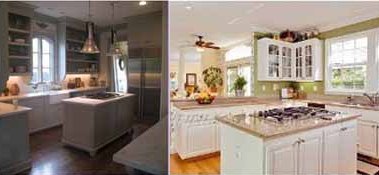
Kitchen work triangle : The three main functions in a kitchen are storage, preparation, and cooking. The work at one place should not interfere with work at another place. A natural arrangement is a triangle, with the refrigerator, the sink, and the stove at a vertex each.Common kitchen forms characterized by the arrangement of the kitchen cabinets and sink, stove, and refrigerator:
A single-file Kitchen has all of these along one wall; the work triangle degenerates to a line. This is not optimal, but often the only solution if space is restricted.
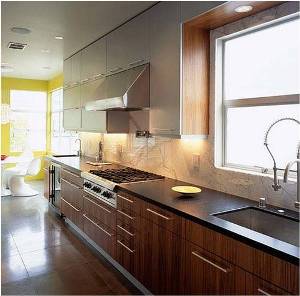
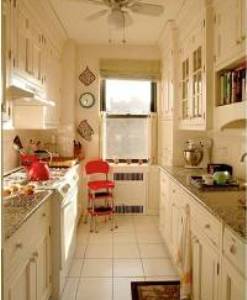
The double-file kitchen has two rows of cabinets at opposite walls, one containing the stove and the sink, the other the refrigerator. This is the classical work kitchen.
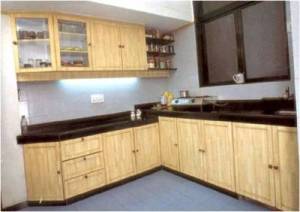
In the L-kitchen, the cabinets occupy two adjacent walls. Again, the work triangle is preserved, and there may even be space for an additional table at a third wall, provided it does not intersect the triangle.
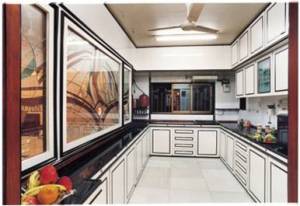
A U-kitchen has cabinets along three walls, typically with the sink at the base of the “U”.
The block kitchen (island) is typically found in open kitchens. The stove or both the stove and the sink are placed where an L or U kitchen would have a table, in a freestanding “island”, separated from the other cabinets. It makes the stove accessible from all sides such that two persons can cook together, and allows for contact with guests or the rest of the family, since the cook does not face the wall anymore