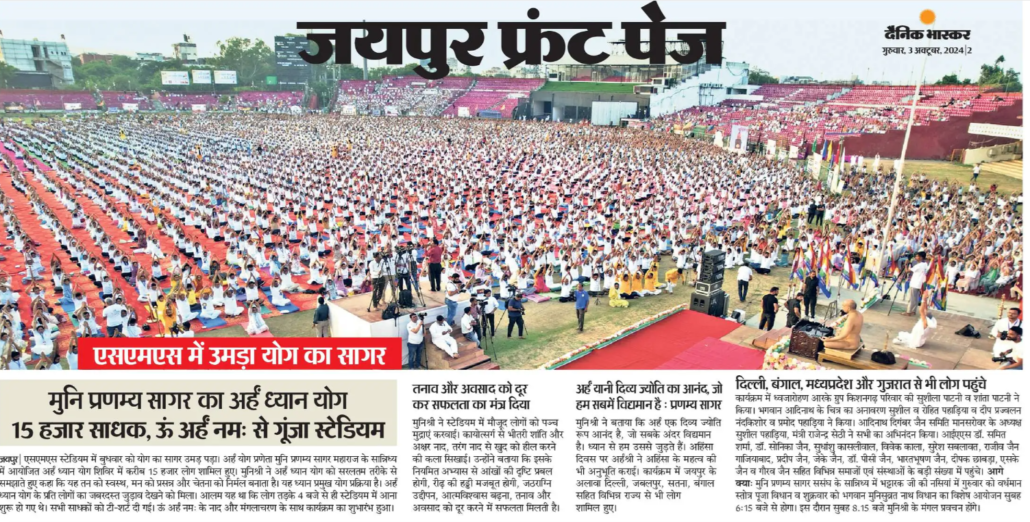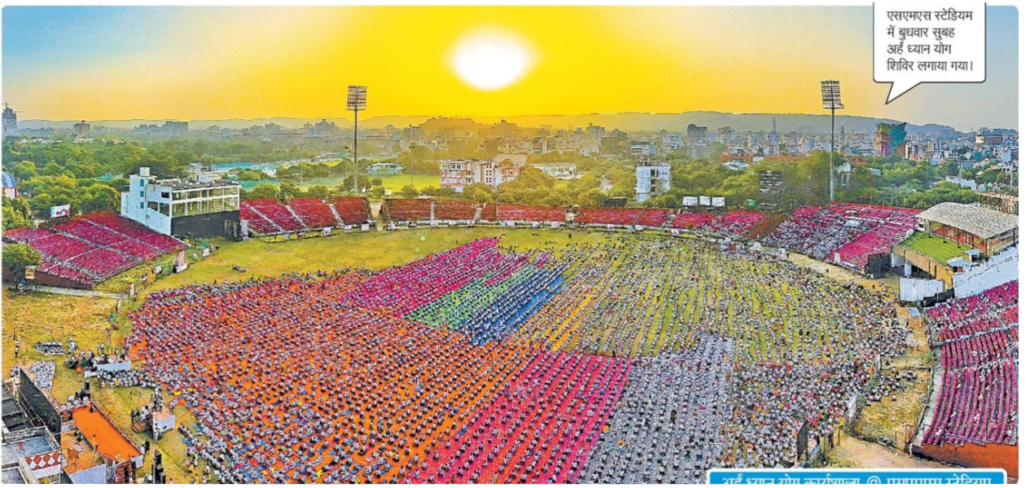

बुधवार 2 OCT गांधी जयंती को एसएमएस स्टेडियम में योग का विशाल समागम देखने को मिला। अर्हं योग प्रणेता मुनि प्रणम्य सागर महाराज के सान्निध्य में आयोजित अर्हं ध्यान योग शिविर में लगभग 25,000 लोग उपस्थित हुए। मुनिश्री ने अर्हं ध्यान योग को सरल तरीके से समझाते हुए कहा कि यह न केवल शरीर को स्वस्थ रखता है, बल्कि मन को प्रसन्न और चेतना को शुद्ध बनाता है। उल्लेखनीय है कि अर्हं ध्यान योग आयुष मंत्रालय, भारत सरकार के अंतरराष्ट्रीय योग दिवस का आधिकारिक भागीदार है।
On Wednesday, October 2, Gandhi Jayanti, a grand yoga gathering was witnessed at SMS Stadium. Around 25,000 people attended the Arham Dhyan Yoga camp, organized under the guidance of Arham Yoga pioneer, Muni Pranamya Sagar Maharaj. Muni Shri explained the simplicity of Arham Dhyan Yoga, stating that it not only keeps the body healthy but also makes the mind joyful and purifies consciousness. Notably, Arham Dhyan Yoga is the official partner of the International Yoga Day by the Ministry of AYUSH, Government of India.
अर्हं ध्यान योग एक महत्वपूर्ण योग प्रक्रिया है, और इसे लेकर लोगों में जबरदस्त उत्साह देखा गया। लोग सुबह 4 बजे से ही स्टेडियम पहुंचने लगे थे। सभी साधकों को टी-शर्ट वितरित की गई और कार्यक्रम का शुभारंभ ॐ अर्हं नमः के नाद और मंगलाचरण के साथ हुआ।
Arham Dhyan Yoga is an essential yoga practice, and there was immense enthusiasm among the people for it. People started arriving at the stadium as early as 4 a.m. All the participants were given T-shirts, and the program began with the chanting of “Om Arham Namah” and Manglacharan.
तनाव और अवसाद से मुक्ति का मार्ग
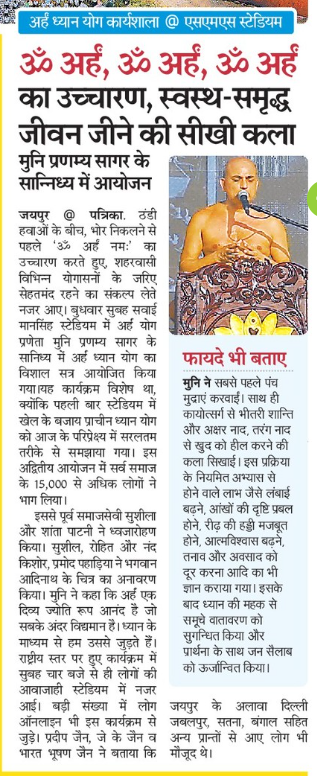
मुनिश्री ने स्टेडियम में उपस्थित साधकों को पंच मुद्राएं करवाईं और कायोत्सर्ग के माध्यम से आंतरिक शांति प्राप्त करने और अक्षर नाद, तरंग नाद के जरिए खुद को हील करने की विधि सिखाई। उन्होंने बताया कि नियमित अभ्यास से आंखों की दृष्टि तेज होती है, रीढ़ की हड्डी मजबूत होती है, पाचन शक्ति में सुधार होता है, आत्मविश्वास बढ़ता है और तनाव व अवसाद से छुटकारा मिलता है।
योग का अर्थ है कि हम अपने आप को अपने भीतर से जोड़ते हैं। हमारे पास तीन प्रमुख तत्व होते हैं—मन, वचन, और काय (शरीर)। जब ये तीनों तत्व अलग-अलग ढंग से काम करते हैं, तो हमारे जीवन में कई तरह की परेशानियाँ और बीमारियाँ उत्पन्न होती हैं। योग के माध्यम से, जब हम इन सभी तत्वों को एक जगह पर केंद्रित कर लेते हैं, तो हम शारीरिक, मानसिक और आध्यात्मिक रूप से स्वस्थ होने लगते हैं। योग के द्वारा ही हमारे भीतर ध्यान की स्थिति उत्पन्न होती है, और ध्यान को वास्तव में अत्यधिक उपयोगी माना जाता है, क्योंकि यह मानसिक शांति और संतुलन प्रदान करता है।
अर्हं ध्यान योग के पाँच चरण Five Steps Of ARHAM
- A = Activation (सक्रियता): शरीर और मन में ऊर्जा को सक्रिय करना, जिससे ध्यान की प्रक्रिया की शुरुआत हो सके।
- R = Relaxation (विश्राम): शारीरिक और मानसिक तनाव को छोड़कर विश्राम की स्थिति प्राप्त करना, जिससे मन और शरीर शांत हो सकें।
- H = Healing (चिकित्सा): ध्यान के माध्यम से आत्म-चिकित्सा करना, मन का उपयोग करके शारीरिक और भावनात्मक कल्याण को पुनर्जीवित और ठीक करना। अपनी ऊर्जा प्रवाह को सुधारना, अपनी ऊर्जा को पुनर्स्थापित करना, और नकारात्मक ऊर्जा को सकारात्मक ऊर्जा में परिवर्तित करना। मानसिक शांति में बाधा आने से उत्पन्न शारीरिक बीमारियों को ठीक करना। चिकित्सा के स्तर शारीरिक, मानसिक, भावनात्मक, और आध्यात्मिक होते हैं। चिकित्सा के विभिन्न तरीके निम्नलिखित हैं:
- मंत्रों के माध्यम से चिकित्सा:
- रंग चिकित्सा:
- प्रार्थना के माध्यम से चिकित्सा:
- अच्छी भावनाओं के माध्यम से चिकित्सा:
- A = Awareness (जागरूकता): अपने, अपने परिवेश और चेतना के गहरे स्तरों के प्रति एक उच्च जागरूकता विकसित करना।
- M = Motivation (प्रेरणा): ध्यान से प्राप्त ऊर्जा और अंतर्दृष्टि को सकारात्मक कार्यों और दैनिक जीवन में प्रेरणा के रूप में उपयोग करना।
A= Activation : Asana and Mudra
R= Relaxation
H= Repairing own flow of energy, resorting own energy, converting negative energy in positive energy. Physical Disease caused due to disturbance of mental peace. Level of healing are physical, Mental, emotional and spiritual level. healing methods can be done healing through mantra, healing through Colour Therapy , healing through prayer, healing through good feeling.
A= Awareness
M= Motivation
The Path to Relieve Stress and Depression
अर्हं: दिव्य ज्योति का अनुभव
Muni Shri guided the participants through the five postures (Panch Mudras) and taught the techniques of attaining inner peace through Kayotsarga and healing oneself through Akshar Naad and Tarang Naad. He mentioned that regular practice sharpens eyesight, strengthens the spine, improves digestion, boosts self-confidence, and helps overcome stress and depression.
मुनिश्री ने कहा कि “अर्हं” एक दिव्य ज्योति का आनंद है, जो हर व्यक्ति के भीतर विद्यमान है। ध्यान के माध्यम से हम उस आनंद से जुड़ सकते हैं। अहिंसा दिवस पर अर्हंश्री मुनि प्रणम्य सागर महाराज ने अहिंसा के महत्व की भी अनुभूति कराई। इस कार्यक्रम में जयपुर के अलावा दिल्ली, जबलपुर, सतना, बंगाल सहित विभिन्न राज्यों से लोग शामिल हुए थे। दिल्ली, बंगाल, मध्यप्रदेश और गुजरात से भी बड़ी संख्या में लोग पहुंचे।
Arham: The Experience of Divine Light
Muni Shri explained that “Arham” is the bliss of divine light that resides within everyone. Through meditation, we can connect with this bliss. On the occasion of Ahimsa Day, Muni Pranamya Sagar Maharaj also emphasized the importance of non-violence. People from various states, including Delhi, Jabalpur, Satna, and Bengal, participated in this event, along with a large number of attendees from Delhi, Bengal, Madhya Pradesh, and Gujarat.
Newpaper Cutting