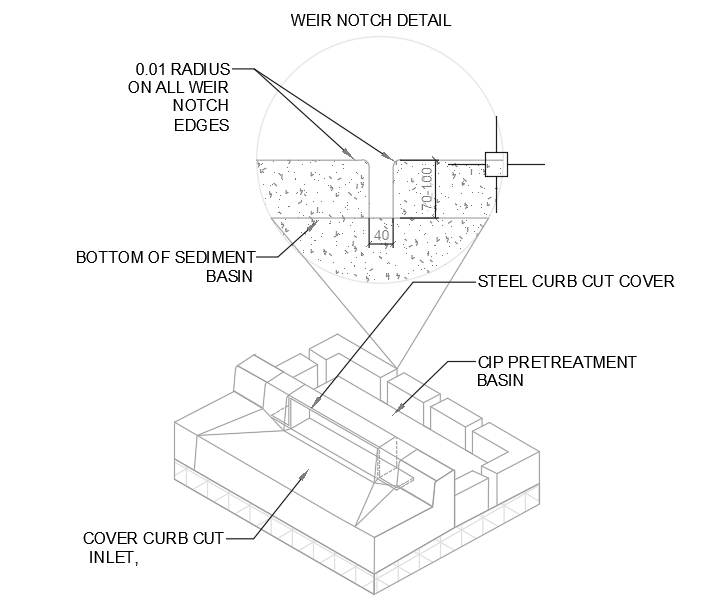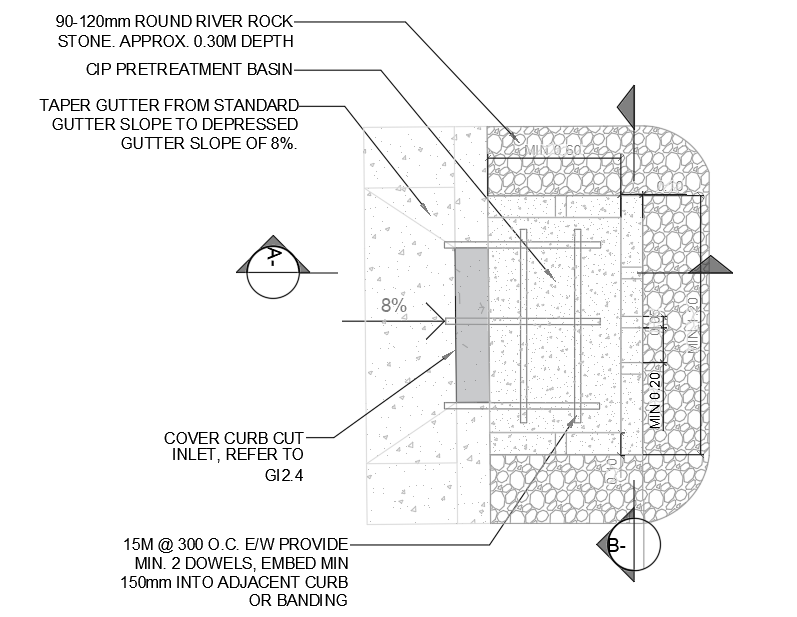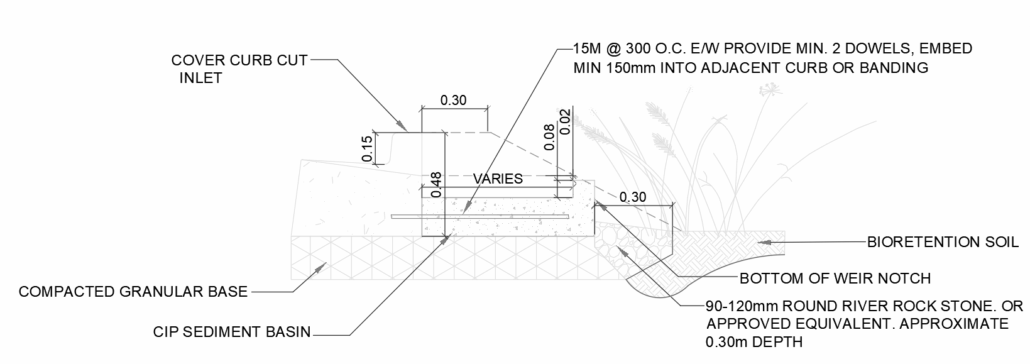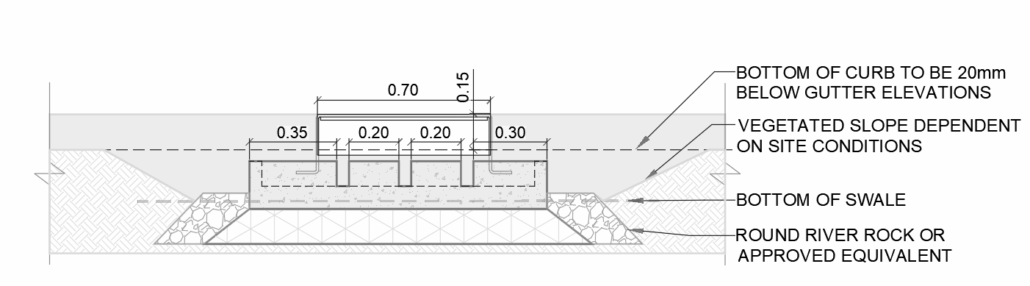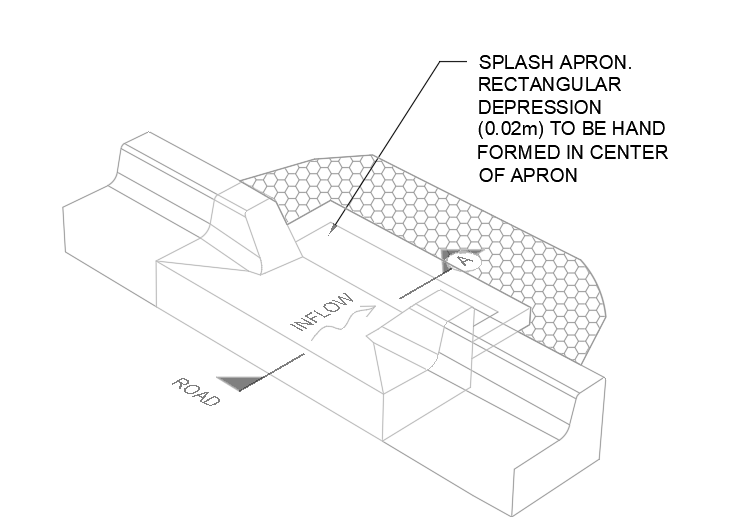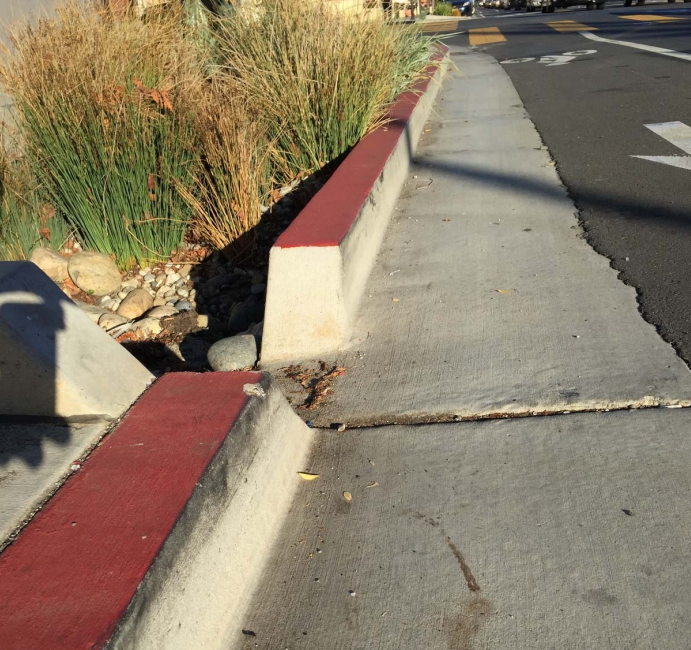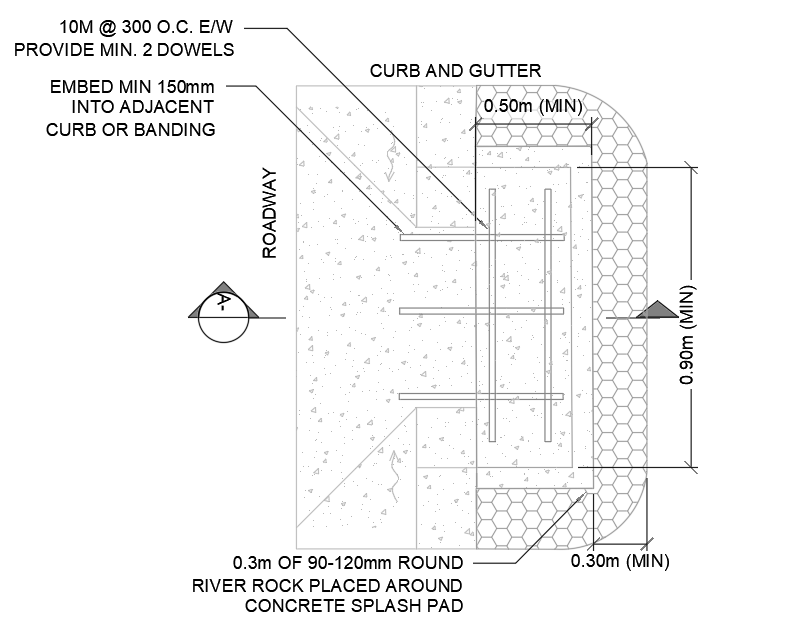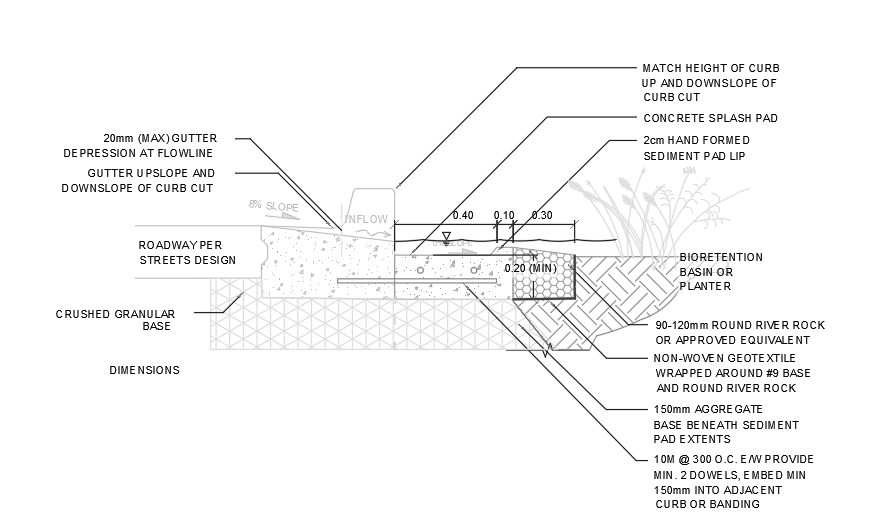

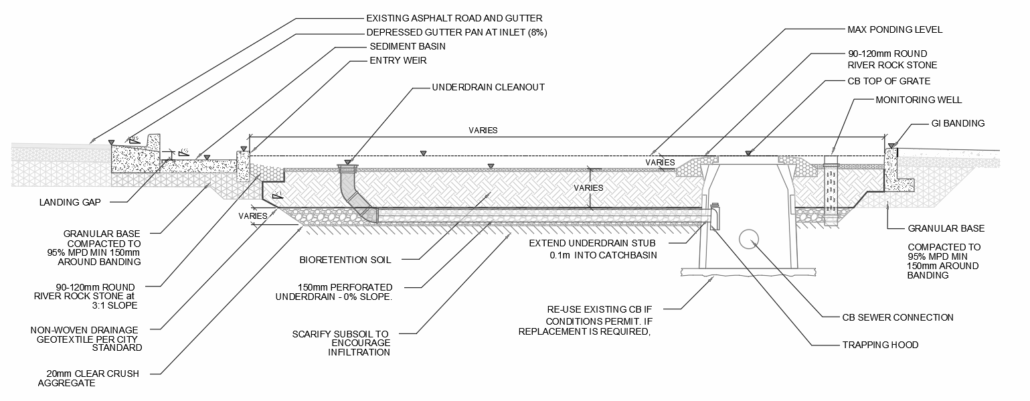
The bioretention profile represents a template cross-sectional layout of a typical bioretention system. While actual dimensions, configurations, and materials may vary depending on site-specific conditions, contributing drainage area, and desired hydrologic performance, each system generally consists of the same core layers and functional components. These layers are designed to work together to filter pollutants, promote infiltration, and support vegetation growth while maintaining structural stability and water quality performance.
Purpose and Function:
Bioretention systems serve as an essential green infrastructure practice that manages stormwater through filtration, infiltration, evapotranspiration, and biological uptake. The layer composition and depth determine the system’s ability to:
- Capture and temporarily store runoff, reducing downstream peak flows.
- Filter sediments, nutrients, and metals through engineered media.
- Promote infiltration into subsoils where feasible.
- Support healthy plant growth that enhances pollutant removal and provides aesthetic and ecological value.
- Protect underlying structures through bedding and liner systems as required.
Typical Components and Layer Specifications:
The following table summarizes the standard layers that make up a bioretention system profile, including recommended thicknesses and applicable specifications.
| Cell Layer | Recommended Layer Thickness (m) | Function |
|---|---|---|
| Composted Mulch | 0.05 – 0.075 | Surface layer that protects underlying soil from erosion, retains moisture, suppresses weeds, and provides organic matter. |
| Bioretention Soil Media | 0.45 – 1.00 | Engineered soil mix designed to balance infiltration, filtration, and nutrient retention while supporting vegetation. |
| Aggregate / Bedding Layer | 0.20 – 0.40 | Provides drainage and structural support; promotes even distribution of flow to subdrains or underlying soils. |
| Geotextile Fabric | N/A | Separates soil media from aggregate, preventing migration of fine particles while allowing hydraulic connectivity. |
| Impermeable Liner (for non-infiltrating systems only) | N/A | Prevents infiltration where site conditions (e.g., high groundwater, contaminated soils, or utility conflicts) require containment of stormwater. |
Design Considerations:
- Depth and Sizing: Bioretention depth and footprint area should be based on hydrologic modeling of the contributing drainage area and target stormwater volume capture (commonly 25–100 mm of runoff).
- Media Composition: The soil media should typically consist of a mixture of sand, loam, and organic material, tested to ensure appropriate infiltration rates (generally 50–300 mm/hr).
- Vegetation: Plant selection should be based on tolerance to periodic inundation and drought, and should include a mix of native grasses, shrubs, and herbaceous perennials.
- Underdrain System: Where infiltration into native soil is limited, include a perforated underdrain embedded within the aggregate layer to convey filtered water to downstream storm infrastructure.
- Overflow Structure: An overflow or bypass inlet should be incorporated to manage flows that exceed the design storm.
- Maintenance Access: Ensure adequate access for inspection and media replacement when necessary.
Construction and Maintenance Notes:
- The bioretention system should be constructed in accordance with approved design drawings and specifications, ensuring that layer thicknesses and material gradations meet design intent.
- Erosion control measures must be implemented during construction to prevent sediment contamination of the bioretention media.
- Periodic maintenance should include mulch replenishment, vegetation management, and inspection of inlets and underdrains to maintain infiltration and filtration capacity.