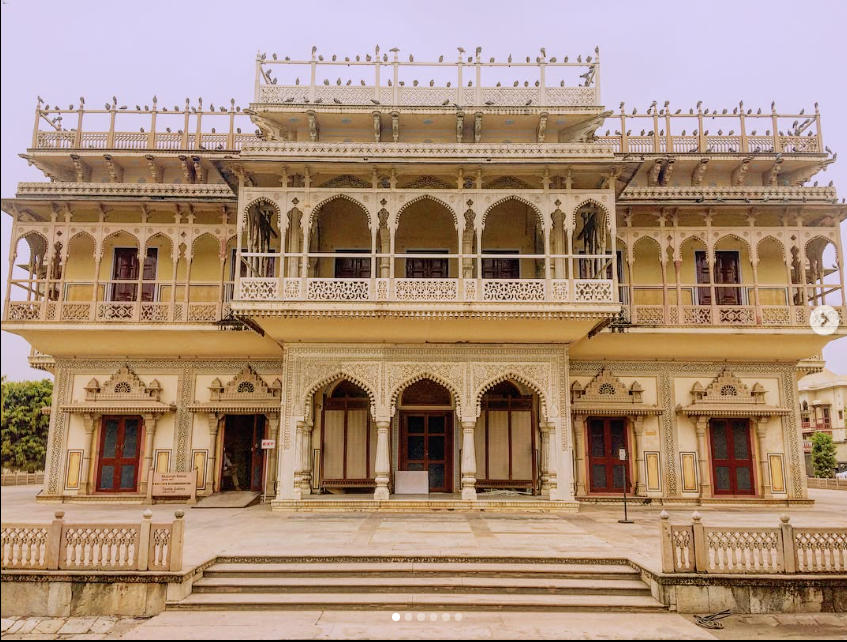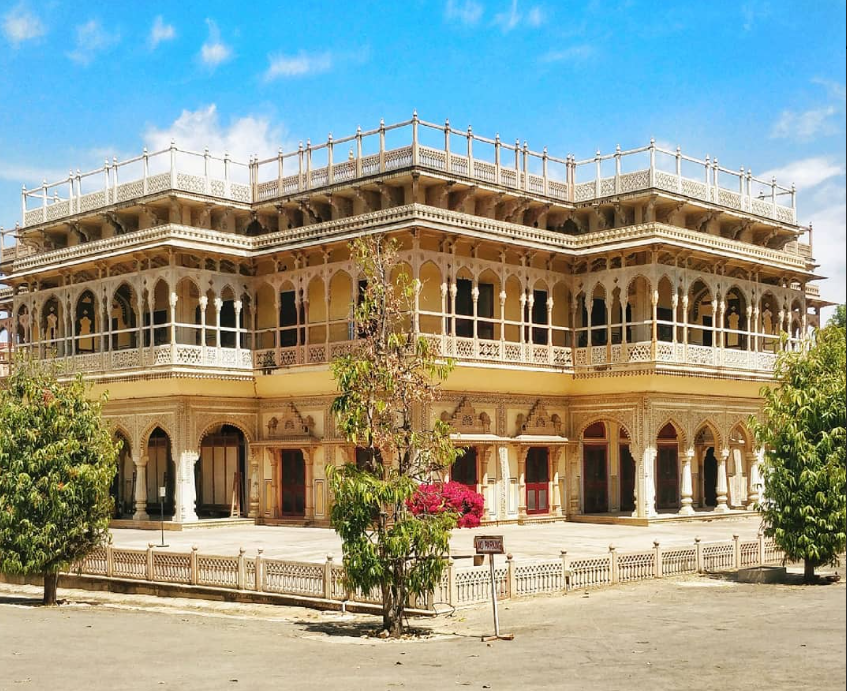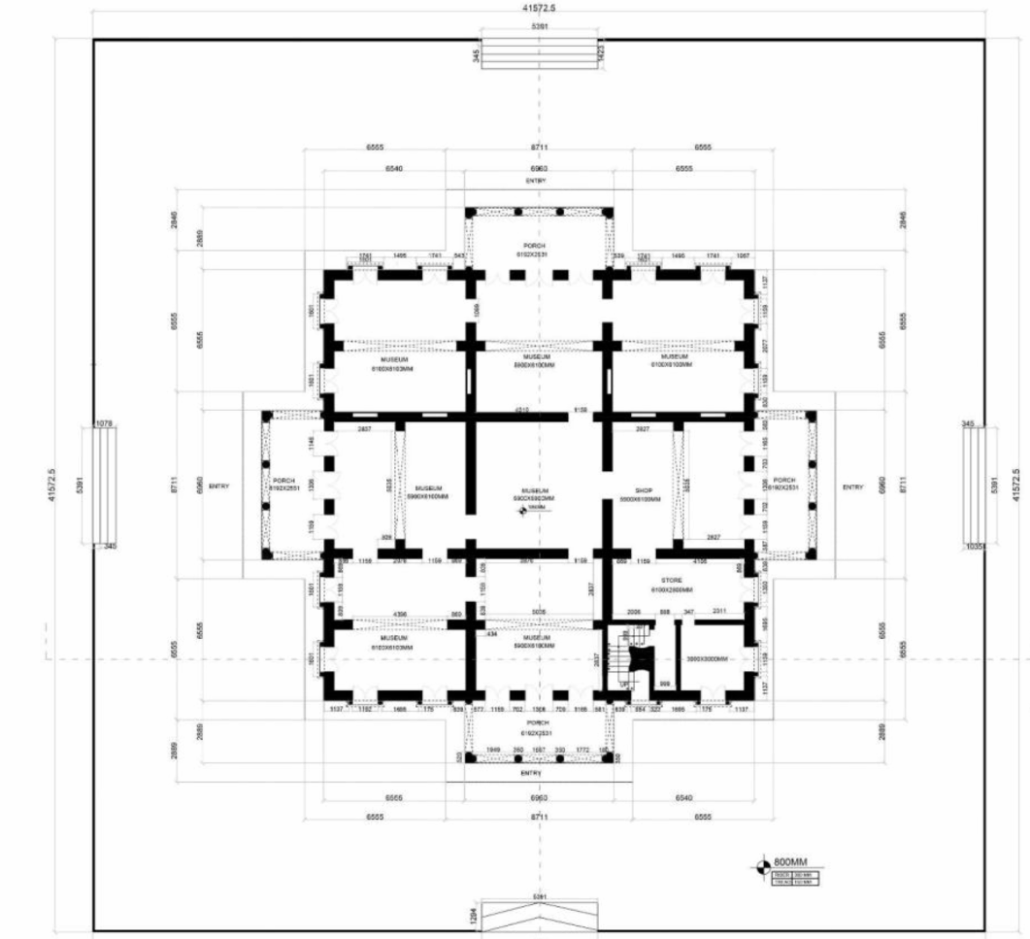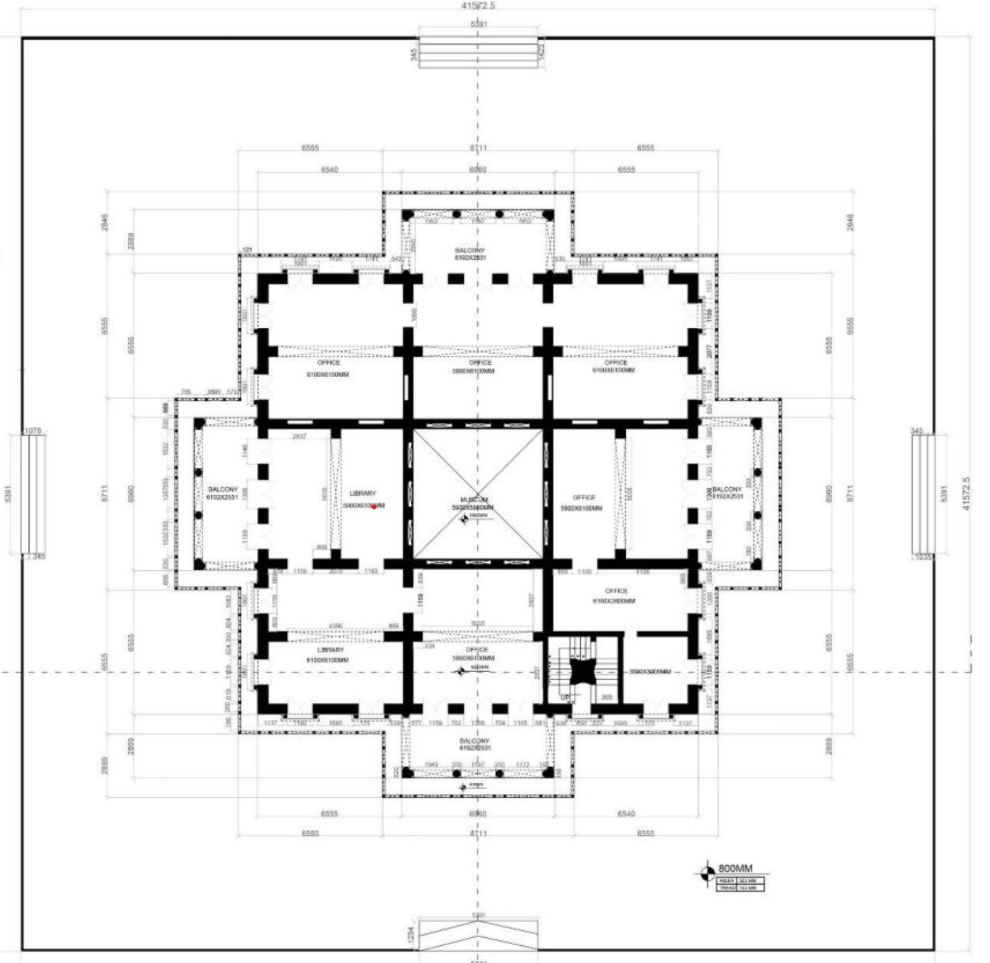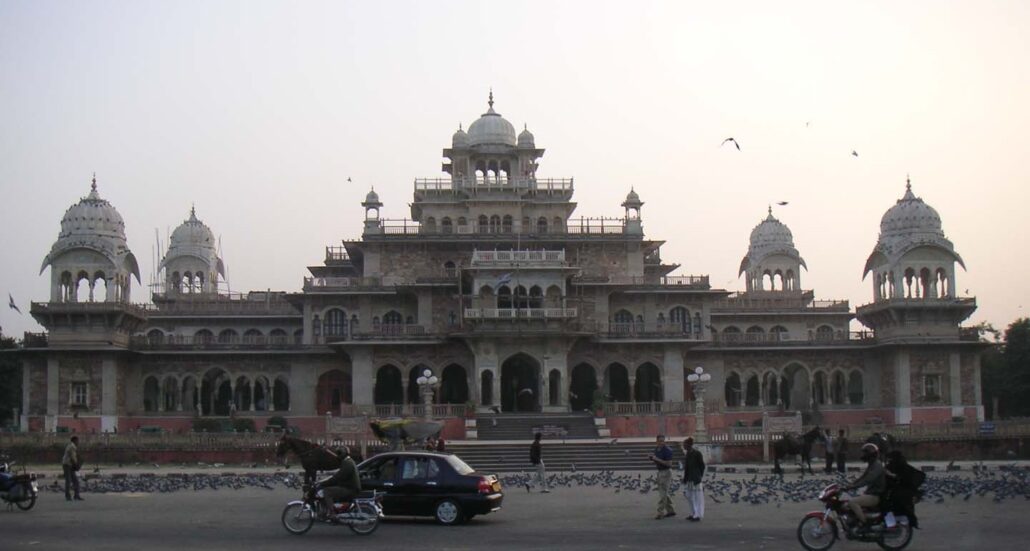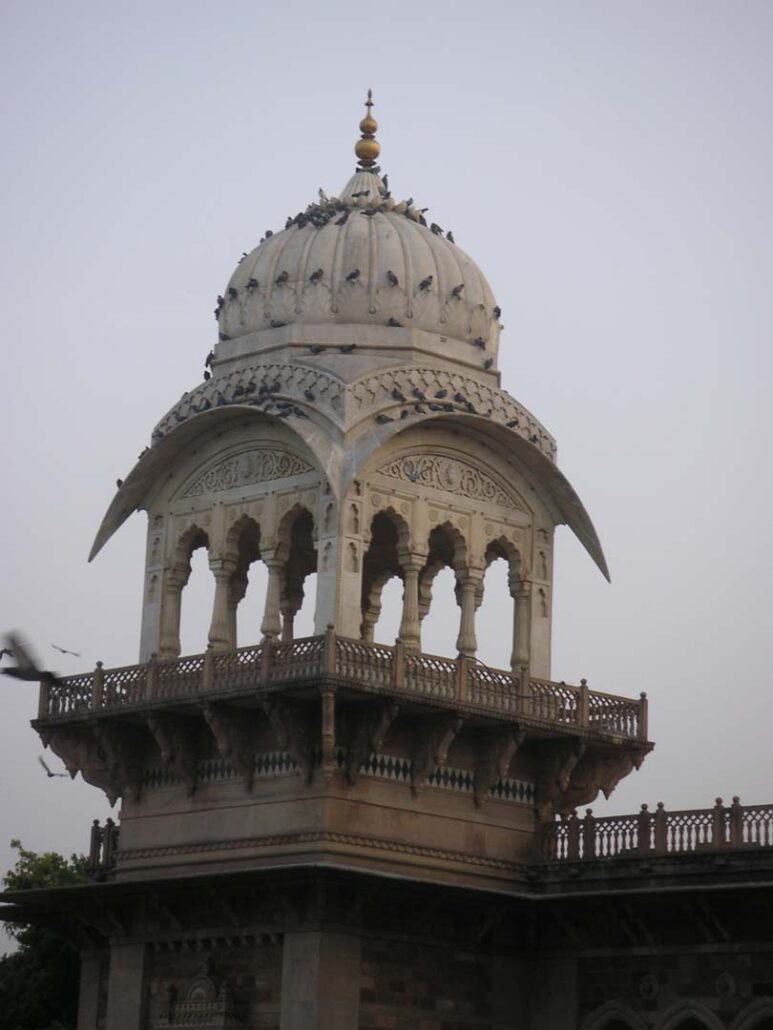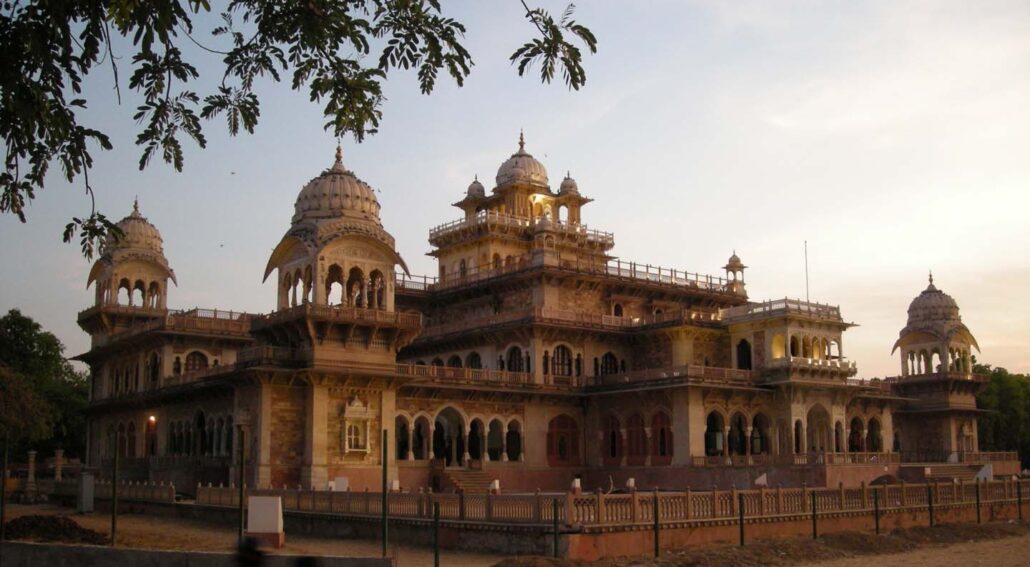

As Jaipur entered the twentieth century, its architectural identity stood at a crossroads. The Raj Imarat, under local architects such as Chiman Lal and his deputy Bhola Nath, carried forward the legacy of Samuel Swinton Jacob. Yet the stylistic and structural outcomes of this period reflect both a continuation and a transformation of Jaipur’s building traditions.
King Edward Memorial Sarai (1911–15)
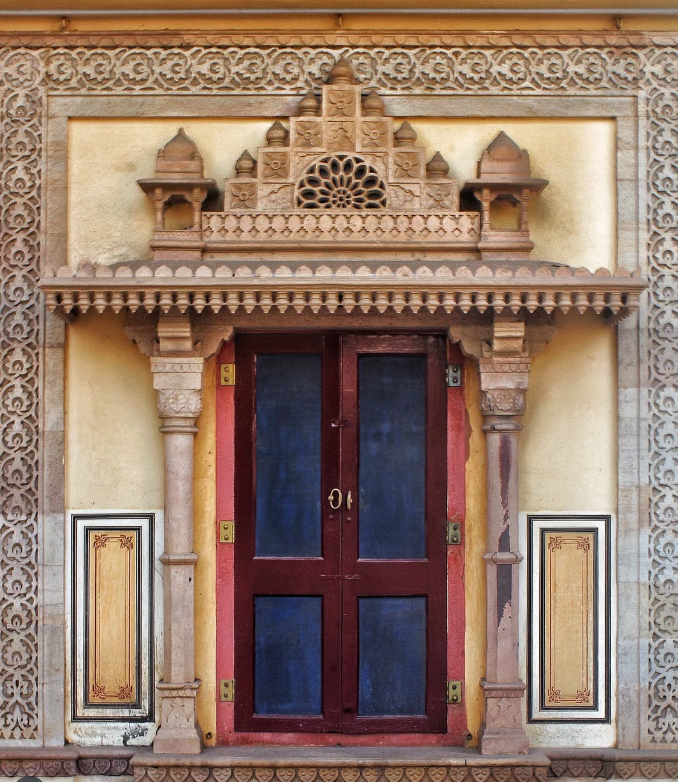
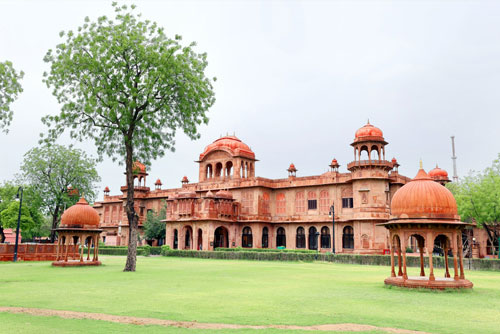
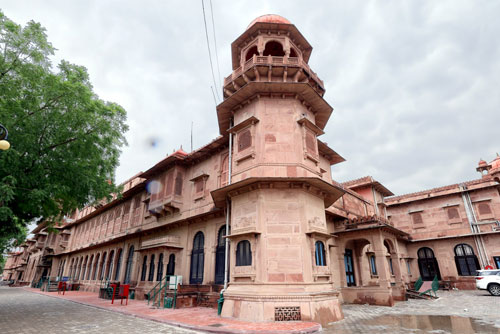
One of the significant undertakings of the Raj Imarat was the King Edward Memorial Sarai, built outside the city wall on what is today Mirza Ismail Road. Though executed after Jacob had stepped away from the epicenter of Jaipur’s projects, the design bore traces of his influence. The Sarai’s stone carving, for instance, echoed his stylistic imprint, but rather than being fully integrated into the design, the ornamentation appeared as decorative layers over a largely utilitarian structure. This revealed a subtle shift—away from craft-led integration and toward an increasingly modern separation of structure and ornament.
The Rambagh Palace: Layers of Transformation
The Rambagh Palace, today one of Jaipur’s most celebrated luxury hotels, embodies the layered history of Jaipur’s evolving architecture.
- Origins (c. 1835): Began as a modest garden retreat for Sawai Ram Singh.
- Jacob’s Phase (early 1900s): Maharaja Madho Singh envisioned its transformation into a guest house. Jacob prepared designs, but the actual execution (1909–1916) was overseen by Chiman Lal and Bhola Nath. Two long wings, a connecting range of rooms, and a great hall gave the palace its characteristic U-shaped plan. In November 1916, the new palace was inaugurated with a banquet in honor of Viceroy Lord Chelmsford. This was to be Chiman Lal’s final major project before his retirement in 1919.
- Expansion under Man Singh II (1930s): The last Maharaja, Sawai Man Singh II, added vast new wings, reshaping the palace into a modern residential complex. The new courtyard, Western-style entrance, and sheer scale reflected the Maharaja’s cosmopolitan lifestyle. By the 1940s, Rambagh had become his primary residence, symbolizing the shift from Rajput courtly traditions to a more Westernized princely life.
Shifting Styles and Planning Ideals
Across these projects, one sees the persistence of Indian motifs—arches, balconies, columns—yet their spatial organization gradually transformed. Jacob and Chiman Lal’s designs, though European in scale, retained some Indian logics of space: shifting floor levels, screened balconies, and subtle transitions. But by the mid-20th century expansions under Man Singh, these nuances had vanished, replaced by layouts firmly rooted in Western planning ideals.
Beyond the Palace Walls
Meanwhile, Jaipur’s urban development mirrored these shifts. The Albert Hall Museum and its landscaped Ram Niwas Bagh had already signaled the growth of a new southern extension to the city. By the 1940s, roads like Mirza Ismail Road embodied the spatial reorientation of Jaipur—outward, open, and modern—beyond the mandalic order of Jai Singh’s walled city.
A Legacy of Transition
The works of this period mark a transitional moment in Jaipur’s architectural history. They preserved the visual vocabulary of Rajput tradition, yet their methods of design and spatial concepts leaned increasingly toward European ideals. In the Rambagh Palace, especially, we see the symbolic arc of Jaipur’s rulers—from retreat and reception to modern residence—mirroring their cultural journey from traditional custodianship to participation in a Westernized princely lifestyle.
Home page : Jaipur – UNESCO World Heritage City
The Chowkris – The Wards of Jaipur | The Mohallas – Life Within the Wards | Jal Mahal and Ishvar Lat Jaipur | Hawa Mahal – The Palace of Winds | Jaipur Heritage Walk | Important Bazar | Chowkri Modikhana | Chowkri Vishveshwarji
Jeypore portfolio of architecture details : Part-1 Coping and Plinths
Plate 1 | Plate 2 | Plate 3 | Plate 4 | Plate 5 | Plate 6 | Plate 7 | Plate 8 | Plate 9 | Plate 10 | Plate 11 | Plate 12 | Plate 13 | Plate 14 | Plate 15 | Plate 16 | Plate 17 | Plate 18 | Plate 19 | Plate 20 | Plate 21 | Plate 22 | Plate 23